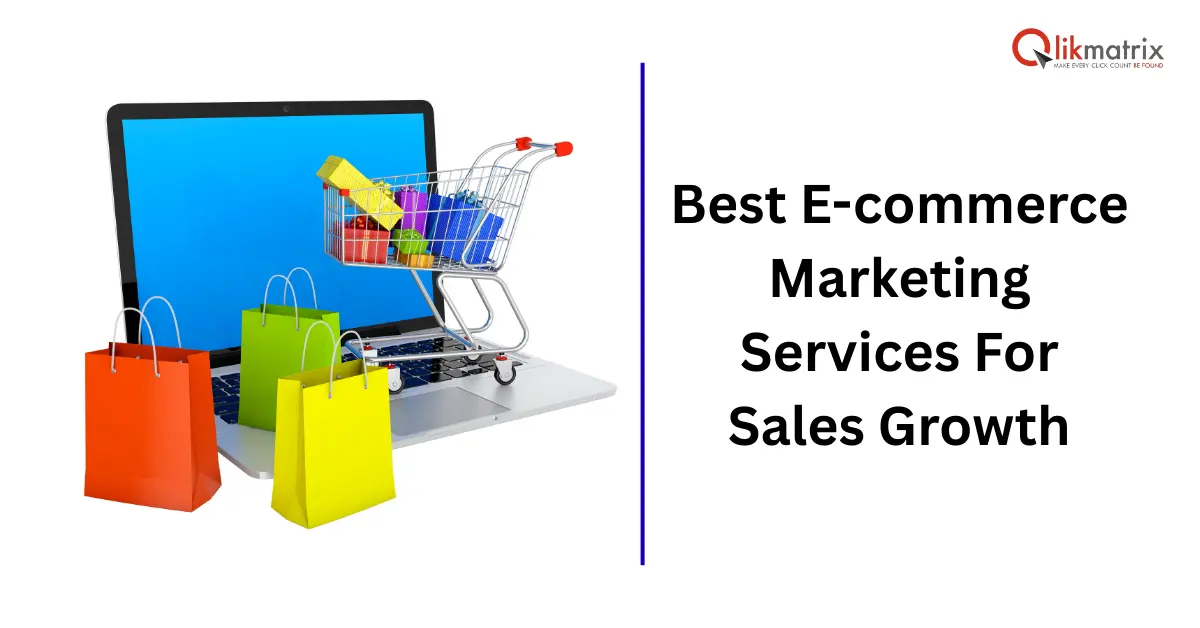
Best Ecommerce Marketing Services For Sales Growth

Ecommerce Marketing Services For Sales

Online stores open every day. Products go live, ads are switched on, and listings appear across marketplaces. Still, many stores struggle to move beyond a few sales. Traffic comes in, but buyers leave without completing orders. Listings look fine, prices seem right, yet growth feels slow and confusing. The gap usually lies in how products are marketed online.

Selling on the internet is not only about being present. It is about being visible in the right places, speaking clearly to buyers, and making the buying journey simple. This is where well-planned ecommerce marketing services play a major role.

If marketing is done in the right way helps online stores get noticed, earn trust, and turn visitors into paying customers, without guesswork or wasted effort.

Understanding Ecommerce Advertising

Ecommerce advertising is the process of promoting products and services digitally using various digital channels. These channels consist of search engines, social media platforms, websites, mobile apps, and email campaigns. The goal stays simple: reach people who are already searching for similar products and make them buy the products.

This form of advertising supports online selling by putting products in front of buyers at the right time. Ads may appear when someone looks for an item, scrolls through social media, or check their emails.

Key points about ecommerce advertising consist of:-

  • Focus on selling through online platforms
  • Use of targeted ads instead of general promotions
  • Ability to promote both physical and digital products
  • Direct connection between marketing strategies and sales activity

Ecommerce marketing services help businesses use these channels, making sure their products are not lost among competitors.

5 Advantages of Ecommerce Marketing

Online selling provides clear benefits when supported by the right marketing approach. Below are some major benefits explained in simple terms.

1. Fast Buying Process

Online stores allow customers to buy products within minutes.

  • A few clicks are enough to place an order
  • Ecommerce platforms provide tailored templates
  • Marketplaces need only an account setup

This process helps buyers to complete purchases without delays.

2. Easy Product Listing Creation

Product listings act as digital shelves.

  • Images and descriptions can be updated easily
  • Listings can be personalized for better appeal
  • No heavy technical work is required

Clear ideas and descriptions help buyers know products.

3. Reasonable System

Online stores can be started with minimal spending.

  • Monthly costs remain low
  • Marketplaces charge only a small selling fee
  • No physical rent or large staff expenses

This allows gradual growth without heavy upfront investment.

4. Flexible Marketplace Access

Online stores never close.

  • Products remain available all day
  • Niche markets are easier to serve
  • Convenience features increase repeat purchases

Such flexibility supports steady ecommerce marketplace growth.

5. Wider Audience Reach

Selling online removes location limits.

  • International customers can be reached
  • Promotions travel faster
  • Engagement happens in real time

This wider reach strengthens ecommerce marketplace marketing efforts.

Why You Should Hire Ecommerce Marketing Services?

Running an online store alone often leads to limited results. Partnering with experts brings structure and clarity.

Fresh Thinking and New Views

Internal teams may repeat the same ideas.

  • External experts offer new perspectives
  • Buyer behavior is studied carefully
  • Marketing messages become more relatable

This leads to campaigns that connect better with customers.

Access to Advanced Tools

Professional teams use updated tools and methods.

  • Real-time campaign insights
  • Customized strategies
  • Improved ad targeting

Such tools are often costly or complex for in-house teams.

Lower Operating Costs

Hiring a full internal team increases expenses.

  • No need for tool licenses
  • No hiring or training costs
  • One team handles multiple needs

This makes the best ecommerce marketing services cost-efficient in the long run.

Reputation Management

Online reviews matter.

  • Feedback is monitored
  • Negative responses are handled professionally
  • Brand image remains protected

Analytics and Reporting

Performance tracking becomes clearer.

  • Campaign results are measured
  • Weak areas are identified
  • Decisions are made using real data

Customer Experience Optimization

Small changes improve sales.

  • Better product descriptions
  • Clear call-to-action buttons
  • Simplified layouts

Better User Experience

User-friendly websites convert more visitors.

  • Faster loading pages
  • Smooth checkout process
  • Simple navigation

Targeted Advertising

Ads reach the right audience.

  • Reduced wasted spending
  • Higher chances of conversion
  • Stronger returns

This is where an experienced ecommerce marketing agency adds long-term value.

Key Ecommerce Marketing Services

Successful online stores trust many connected services.

Search Engine Optimization

This service enhances online visibility:

  • Product pages rank better
  • Organic traffic increases
  • User experience improves

On-page and technical SEO help to get the most traffic

Social Media Marketing

Social platforms build real connections.

  • Regular engagement
  • Helpful content sharing
  • Paid promotions for reach

Pay-per-Click (PPC) Marketing

PPC brings quick results.

  • Ads target buyers actively searching
  • A/B testing improves performance
  • Remarketing reconnects lost visitors

Content Marketing

Content builds trust.

  • Blogs answer common questions
  • Product guides educate buyers
  • Customer stories create confidence

Email Marketing

Email keeps customers engaged.

  • Personalized messages
  • Automated follow-ups
  • Long-term relationship building

All these services together form effective ecommerce marketing services.

Strategy for Ecommerce Marketing

A clear strategy keeps efforts focused and effective.

Set Clear Goals

Goals guide actions.

  • Website visits
  • Engagement levels
  • Customer acquisition focus

Break Plans into Small Steps

Trying everything together could lead to confusion

  • Choose key strategies
  • Create simple action steps
  • Monitor progress regularly

Focus on Execution

Simple actions work best.

  • Launch ads
  • Track performance
  • Adjust when needed

Keep Customers Engaged

Marketing continues after a sale.

  • Follow-up communication
  • Positive experiences
  • Encouraging feedback and referrals

Pleased users bring new customers by word-of-mouth.

Conclusion

Digital marketing helps you grow independently. Clear messaging, campaigns, and smart decisions turn clicks into loyal customers. This is where experienced ecommerce marketing services make a visible difference. QlikMatrix supports brands across major marketplaces like Amazon, Walmart, and Newegg by building strategies that fit each platform. From smart catalog management and high-converting product pages to precision advertising and data-led optimization, QlikMatrix handles the full journey.

Every platform behaves differently, and QlikMatrix understands those differences. Campaigns are built using real insights, not guesswork. The result stays consistent, with better visibility, stronger conversions, and steady ecommerce marketplace growth. Partnering with a truste ecommerce marketing agency like QlikMatrix helps online brands sell smarter, scale faster, and grow with confidence, without unnecessary noise or wasted effort.
Q1. What is the most expensive online advertising mistake?

Ans. Audience targeting gone wrong, by a distance. A bad keyword wastes only the clicks it generates. Targeting the wrong people means every rupee goes to someone who was never going to buy. It doesn’t stop on its own. It runs until someone actually digs into who’s clicking and finds none of them were real prospects.

Q2. How often should campaigns be reviewed?

Ans. Every week for the first month without exception. After that, every two weeks at a minimum. The search terms report, audience performance breakdown, and creative fatigue all shift faster than a monthly review schedule can catch.

Q3. Does ad copy really change conversion rates that much?

Ans. The difference between two ads targeting the same audience with the same budget but different copy is regularly 200 to 400 percent in conversion rate. Copy is not a secondary consideration. It’s often the primary one.

Q4. How do I know if my conversion tracking is actually working?

Ans. Do a test conversion yourself. Check if it fires in real time inside your platform’s event manager. Then compare the conversion numbers from your ad platform against actual sales in your CRM every week. Consistent gaps between those two numbers mean something is broken in the tracking chain.

Related Blogs

Some of the most expensive online advertising mistakes are sitting inside campaigns that look completely normal on the surface. Impressions coming in. Clicks happening. Budget spending cleanly. And underneath all of it, money going to the wrong people, for the wrong searches, tracked incorrectly, with copy that never had a chance.

Table of Contents

If you work with search engine marketing services or manage paid ads internally, this is where to look first.

1. Poor Audience Targeting

This mistake means paying for every click from people who were never going to buy. It doesn’t stay small. It scales with the budget.

A fitness brand running ads to everyone aged 18 to 65 interested in health is not targeting an audience. That’s broadcasting. Pull actual customer data. Who bought before? What age, location, device? Which pages did they visit before converting? Build lookalikes from real buyers on Meta, not from guesses about who might be interested. For B2B, LinkedIn’s job title and company size filters exist for a reason. Use them with behavioral data layered on top, not instead of it.

On Google, match types matter more in 2026 than most advertisers realise. Broad match without a solid negative keyword list shows ads for searches that have nothing to do with what you sell. Audience settings are not a one-time setup job. Review them every 30 days.

2. Wrong Keyword Selection

This is why campaigns look good in the dashboard and produce nothing in the bank account. Impressions up. Clicks up. Conversions flat.

Someone typing “how does retargeting work” is doing research. Someone typing “retargeting agency for ecommerce” is ready to talk to someone. Both live inside the same industry. Only one has buying intent. Bidding on both with the same budget treats research traffic like purchase traffic, and that’s where money disappears.

Good online advertising mistakes analysis starts with knowing which six areas drain the most money and in what order to fix them. Keyword intent is the first filter. Get it wrong here and everything downstream, the bids, the budget, the reporting, runs on bad inputs.

Negative keywords need to be built before the campaign launches, not discovered in the first week’s search terms report. “Free,” “DIY,” “how to,” and competitor names where you don’t want comparison traffic are the starting point, not the full list. Check the search terms report every week for the first month. What you think you’re targeting and what you’re actually showing for are different lists more often than not.

3. Lack of Conversion Tracking

No tracking means no real data. Every budget decision after that is a guess dressed up as a strategy.

The problem isn’t that advertisers skip tracking. It’s that they set it up wrong and never check whether it’s working. Page view is tracked instead of form submission. Most accounts have the tag firing on page load, not on actual form submission. Every false fire sits in your data as a real conversion, and you optimise against it without knowing. iOS 14 broke attribution in 2021 and most ad accounts still haven’t fixed it, which means Google Ads, Meta pixel, and GA4 are all showing different numbers, and none of them are complete.

Cross-reference them weekly against actual CRM data or backend sales numbers. If the numbers don’t match consistently, something in the tracking chain broke somewhere and you’re optimising campaigns based on wrong information.

4. Low Quality Ad Copy

This is what turns a perfectly targeted campaign into a money pit.

The pattern is almost always the same. The headline leads with the brand name. The body copy lists features. The language is vague. “High quality.” “Trusted.” “Industry-leading.” None of it means anything to someone who doesn’t already know you. And the person seeing your ad doesn’t know you yet.

In search, the headline has to match the intent behind the keyword. Someone searching for accounting software for a small business wants to see that reflected back, specifically, not a tagline that could apply to any software company on earth.

On social, the first two seconds are everything. A hook naming a specific problem the audience actually has, or a claim that catches them off guard, gets the read. A logo and a brand slogan does not. Run three different creative angles per ad set at a minimum. Pull the one that works and scale it. Replace the ones that don’t before they drain the budget.

FAQs

Q1. What is the most expensive online advertising mistake?

Ans. Audience targeting gone wrong, by a distance. A bad keyword wastes only the clicks it generates. Targeting the wrong people means every rupee goes to someone who was never going to buy. It doesn’t stop on its own. It runs until someone actually digs into who’s clicking and finds none of them were real prospects.

Q2. How often should campaigns be reviewed?

Ans. Every week for the first month without exception. After that, every two weeks at a minimum. The search terms report, audience performance breakdown, and creative fatigue all shift faster than a monthly review schedule can catch.

Q3. Does ad copy really change conversion rates that much?

Ans. The difference between two ads targeting the same audience with the same budget but different copy is regularly 200 to 400 percent in conversion rate. Copy is not a secondary consideration. It’s often the primary one.

Q4. How do I know if my conversion tracking is actually working?

Ans. Do a test conversion yourself. Check if it fires in real time inside your platform’s event manager. Then compare the conversion numbers from your ad platform against actual sales in your CRM every week. Consistent gaps between those two numbers mean something is broken in the tracking chain.

Request A Proposal

Our team will connect back with you within 24 hours.

Get In Touch