Reflecting on the Success of the Business Growth Accelerator Series

Success of the Business Growth Accelerator Series

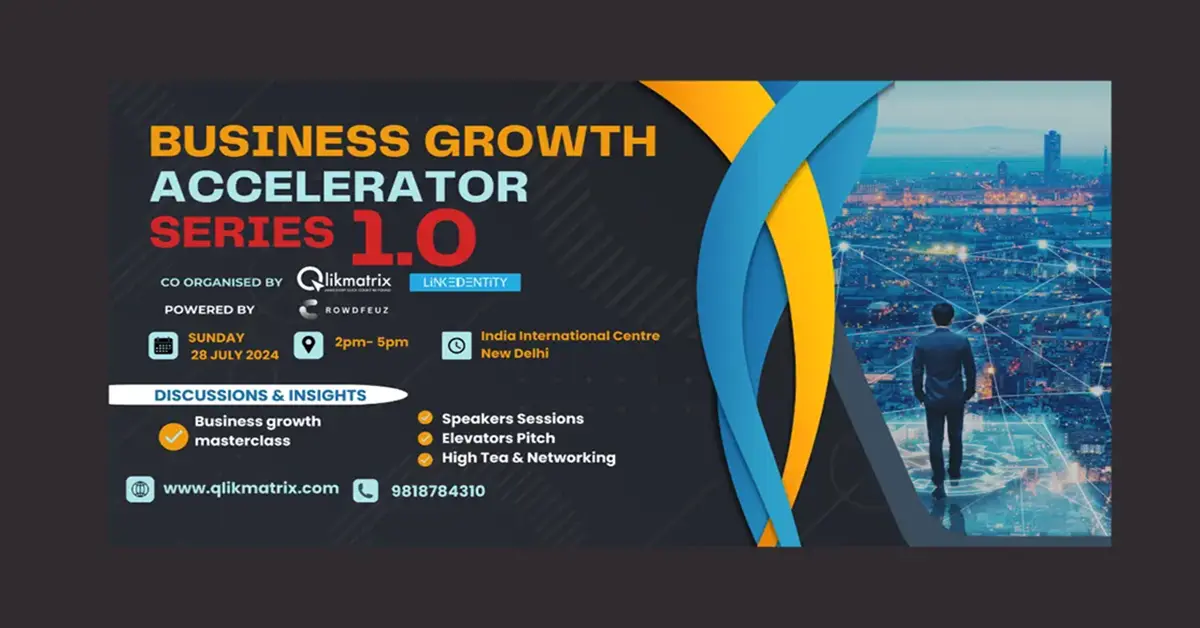
The business growth accelerator series by QlikMatrix brought together entrepreneurs, CEOs, and investors for a transformative event. Attendees gained actionable insights, networking opportunities, and masterclass sessions to accelerate business growth in the digital era. Missing it meant missing a chance to propel your business to new heights.

Business Growth Accelerator Series: Business Success

In today’s hyper-competitive business world, innovation drives success. Recognizing this, QlikMatrix, the leading digital marketing agency, hosted the business growth accelerator series on July 28, 2024. This wasn’t just another event; it was a transformative experience designed to empower businesses and inspire growth strategies. For those who missed it, it was truly a once-in-a-lifetime opportunity to turbocharge business initiatives.

A Story of Innovation and Collaboration

Walking into the business growth accelerator series felt like entering a hub of energy. CEOs, entrepreneurs, investors, and industry leaders came together under one roof with a shared goal: propelling their businesses to new heights. This event went beyond networking—it focused on actionable strategies, meaningful collaborations, and the future of digital marketing. The venue in Delhi-NCR created a vibrant backdrop, reflecting the dynamism and excitement of the day.

Why Missing Out Wasn’t an Option

QlikMatrix ensured every moment of the event added value. The day’s tagline, “Accelerate Your Growth, Amplify Your Success,” resonated through each session. Attendees experienced insights, strategies, and opportunities that could transform their business trajectory.

Exclusive Speaking Slots

One standout feature was the exclusive speaking sessions. Entrepreneurs presented their innovations to industry experts and potential investors. These weren’t just talks—they were launchpads for collaborations and new ventures. Those who missed these sessions missed the chance to witness ideas that are shaping the future of business growth.

Innovative Insights

Staying ahead in the digital age requires continuous learning. The business growth accelerator series offered cutting-edge insights through masterclass sessions led by industry pioneers. Participants gained practical takeaways to navigate the evolving market effectively. For businesses that didn’t attend, missing these lessons could mean the difference between stagnation and growth.

Networking Opportunities

The event attracted over 50 industry leaders, creating unmatched networking opportunities. Attendees connected with like-minded professionals, sparked collaborations, and explored partnerships that could drive long-term growth. Missing these interactions meant losing access to connections that could significantly impact business success.

Elevator Pitch Sessions

The elevator pitch sessions allowed startups and entrepreneurs to present their ideas in a high-stakes environment. Investors were attentive, partnerships formed instantly, and innovative ideas found immediate support. Missing this meant missing groundbreaking business opportunities.

Masterclass Sessions

The masterclasses weren’t just lectures—they were immersive experiences led by industry titans. Participants absorbed actionable knowledge that could be implemented immediately to drive business growth. Those who missed these sessions lost a roadmap for navigating today’s dynamic market challenges.

Event Agenda

The business growth accelerator series was carefully structured to maximize value:

  • 2:00 pm – 2:25 pm: Business Growth Masterclass 1
  • 2:25 pm – 2:30 pm: Speaker Session 1
  • 2:30 pm – 3:30 pm: Elevator Pitch 1
  • 3:30 pm – 3:55 pm: Business Growth Masterclass 2
  • 3:55 pm – 4:00 pm: Speaker Session 2
  • 4:00 pm – 4:45 pm: Elevator Pitch 2
  • 4:45 pm – 5:00 pm: High Tea Networking

Each segment was purposeful—sharing knowledge, showcasing innovation, and fostering meaningful connections.

The Future of Business Growth

Reflecting on the business growth accelerator series, QlikMatrix set a new benchmark for industry events. Attendees left inspired and equipped with strategies to achieve business growth. For those who missed it, future sessions will provide another chance to catch up and stay ahead.

Conclusion

The business growth accelerator series highlighted the power of collaboration, innovation, and foresight. QlikMatrix remains committed to providing businesses with the strategies and insights needed to thrive. Connect with us today to accelerate your growth.

For businesses seeking the best digital marketing services, QlikMatrix stands out as the top digital marketing agency to help achieve sustainable success.

Q1. What is the most expensive online advertising mistake?

Ans. Audience targeting gone wrong, by a distance. A bad keyword wastes only the clicks it generates. Targeting the wrong people means every rupee goes to someone who was never going to buy. It doesn’t stop on its own. It runs until someone actually digs into who’s clicking and finds none of them were real prospects.

Q2. How often should campaigns be reviewed?

Ans. Every week for the first month without exception. After that, every two weeks at a minimum. The search terms report, audience performance breakdown, and creative fatigue all shift faster than a monthly review schedule can catch.

Q3. Does ad copy really change conversion rates that much?

Ans. The difference between two ads targeting the same audience with the same budget but different copy is regularly 200 to 400 percent in conversion rate. Copy is not a secondary consideration. It’s often the primary one.

Q4. How do I know if my conversion tracking is actually working?

Ans. Do a test conversion yourself. Check if it fires in real time inside your platform’s event manager. Then compare the conversion numbers from your ad platform against actual sales in your CRM every week. Consistent gaps between those two numbers mean something is broken in the tracking chain.

Some of the most expensive online advertising mistakes are sitting inside campaigns that look completely normal on the surface. Impressions coming in. Clicks happening. Budget spending cleanly. And underneath all of it, money going to the wrong people, for the wrong searches, tracked incorrectly, with copy that never had a chance.

Table of Contents

If you work with search engine marketing services or manage paid ads internally, this is where to look first.

1. Poor Audience Targeting

This mistake means paying for every click from people who were never going to buy. It doesn’t stay small. It scales with the budget.

A fitness brand running ads to everyone aged 18 to 65 interested in health is not targeting an audience. That’s broadcasting. Pull actual customer data. Who bought before? What age, location, device? Which pages did they visit before converting? Build lookalikes from real buyers on Meta, not from guesses about who might be interested. For B2B, LinkedIn’s job title and company size filters exist for a reason. Use them with behavioral data layered on top, not instead of it.

On Google, match types matter more in 2026 than most advertisers realise. Broad match without a solid negative keyword list shows ads for searches that have nothing to do with what you sell. Audience settings are not a one-time setup job. Review them every 30 days.

2. Wrong Keyword Selection

This is why campaigns look good in the dashboard and produce nothing in the bank account. Impressions up. Clicks up. Conversions flat.

Someone typing “how does retargeting work” is doing research. Someone typing “retargeting agency for ecommerce” is ready to talk to someone. Both live inside the same industry. Only one has buying intent. Bidding on both with the same budget treats research traffic like purchase traffic, and that’s where money disappears.

Good online advertising mistakes analysis starts with knowing which six areas drain the most money and in what order to fix them. Keyword intent is the first filter. Get it wrong here and everything downstream, the bids, the budget, the reporting, runs on bad inputs.

Negative keywords need to be built before the campaign launches, not discovered in the first week’s search terms report. “Free,” “DIY,” “how to,” and competitor names where you don’t want comparison traffic are the starting point, not the full list. Check the search terms report every week for the first month. What you think you’re targeting and what you’re actually showing for are different lists more often than not.

3. Lack of Conversion Tracking

No tracking means no real data. Every budget decision after that is a guess dressed up as a strategy.

The problem isn’t that advertisers skip tracking. It’s that they set it up wrong and never check whether it’s working. Page view is tracked instead of form submission. Most accounts have the tag firing on page load, not on actual form submission. Every false fire sits in your data as a real conversion, and you optimise against it without knowing. iOS 14 broke attribution in 2021 and most ad accounts still haven’t fixed it, which means Google Ads, Meta pixel, and GA4 are all showing different numbers, and none of them are complete.

Cross-reference them weekly against actual CRM data or backend sales numbers. If the numbers don’t match consistently, something in the tracking chain broke somewhere and you’re optimising campaigns based on wrong information.

4. Low Quality Ad Copy

This is what turns a perfectly targeted campaign into a money pit.

The pattern is almost always the same. The headline leads with the brand name. The body copy lists features. The language is vague. “High quality.” “Trusted.” “Industry-leading.” None of it means anything to someone who doesn’t already know you. And the person seeing your ad doesn’t know you yet.

In search, the headline has to match the intent behind the keyword. Someone searching for accounting software for a small business wants to see that reflected back, specifically, not a tagline that could apply to any software company on earth.

On social, the first two seconds are everything. A hook naming a specific problem the audience actually has, or a claim that catches them off guard, gets the read. A logo and a brand slogan does not. Run three different creative angles per ad set at a minimum. Pull the one that works and scale it. Replace the ones that don’t before they drain the budget.

FAQs

Q1. What is the most expensive online advertising mistake?

Ans. Audience targeting gone wrong, by a distance. A bad keyword wastes only the clicks it generates. Targeting the wrong people means every rupee goes to someone who was never going to buy. It doesn’t stop on its own. It runs until someone actually digs into who’s clicking and finds none of them were real prospects.

Q2. How often should campaigns be reviewed?

Ans. Every week for the first month without exception. After that, every two weeks at a minimum. The search terms report, audience performance breakdown, and creative fatigue all shift faster than a monthly review schedule can catch.

Q3. Does ad copy really change conversion rates that much?

Ans. The difference between two ads targeting the same audience with the same budget but different copy is regularly 200 to 400 percent in conversion rate. Copy is not a secondary consideration. It’s often the primary one.

Q4. How do I know if my conversion tracking is actually working?

Ans. Do a test conversion yourself. Check if it fires in real time inside your platform’s event manager. Then compare the conversion numbers from your ad platform against actual sales in your CRM every week. Consistent gaps between those two numbers mean something is broken in the tracking chain.

Request A Proposal

Our team will connect back with you within 24 hours.

Get In Touch