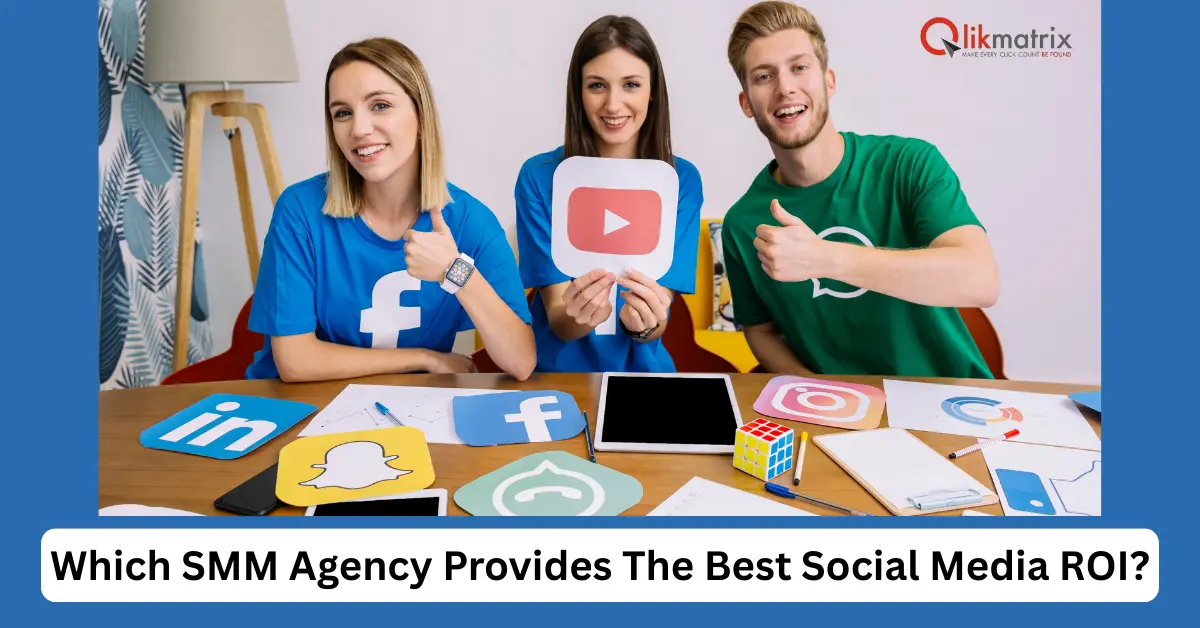
Which SMM Agency Provides the Best Social Media ROI

Social Media Marketing Services (SMM)

These days social media is about more than accumulating followers and likes. For businesses today, that means returns. Brands invest time and money expecting leads, sales, and long-term growth. That’s why the big question is no longer should we use social media, but which agency can actually deliver ROI.

With so many agencies claiming results, finding the right partner can feel confusing. The truth is, the best ROI comes from strategy, consistency, and understanding business goals, not from random posting. This blog breaks down how to identify the SMM agency that truly delivers value.

Before we compare agencies, let’s understand why ROI matters more than ever.

Why Social Media ROI is So Important?

ROI shows whether your money is working for you. Social media ROI is what you get and what you spend.

Quality digital marketing services concentrate on such results as leads, conversions, traffic, and engagement quality. Weak strategies focus only on surface numbers.

Businesses that track ROI can scale faster. They know which platforms work, what content converts, and where to invest more.

Understanding this difference sets the base. Now let’s see what actually drives ROI in social media marketing.

What Drives Real ROI in Social Media Marketing?

High ROI doesn’t come from posting daily alone. It comes from aligned strategy.

The key drivers include:

  • Clear goals
  • Right audience targeting
  • Platform-specific content
  • Paid and organic balance
  • Strong creatives
  • Conversion tracking

Agencies that understand this structure deliver consistent results. Those who don’t often struggle to justify spend.

Once you find out what drives ROI, the trick is finding agencies that believe in that same ideal.

What Makes an SMM Agency ROI-Focused?

An ROI-driven agency thinks like a business partner. They don’t chase trends blindly. They test, measure, and refine.

Such agencies:

  • Start with goals
  • Define KPIs
  • Track conversions
  • Adjust campaigns quickly
  • Share performance reports

Their work fits into broader digital marketing services, supporting sales funnels and customer journeys.

With this foundation in mind, let’s look at the services that actually impact ROI.

Services That Impact Social Media ROI

Agencies delivering strong ROI usually offer a mix of services, not just posting.

These include:

  • Content strategy
  • Paid social ads
  • Audience research
  • Funnel optimisation
  • Retargeting
  • Analytics and reporting

When done right, these services help businesses move users from awareness to action.

This is where agencies offering the best social media marketing services stand apart, they connect content to conversions.

Now that services are clear, the next step is understanding how to judge agencies fairly.

How to Measure ROI From SMM Agencies?

To find the best ROI, businesses must track the right metrics.

These include:

  • Cost per lead
  • Conversion rate
  • Click-through rate
  • Engagement quality
  • Sales attribution

Agencies that clearly explain these numbers are more reliable.

Avoid teams that hide behind vanity metrics. ROI-focused SMM services always connect activity to outcomes.

With measurement covered, let’s explore the role of experience and industry knowledge.

Does Your Industry Impact The ROI From Social Media?

Yes, it does.

Agencies who understand the industry already know customer behaviour, how long your buying cycle is and the type of ‘tone’ your content should have.

For example, B2B social media needs education and trust-building. Ecommerce needs strong creatives and fast conversions.

Experienced SMM marketing services adjust strategies based on industry needs, which directly improves ROI.

Now that experience is covered, let’s talk about paid vs organic strategies.

Paid vs Organic: Which Delivers Better ROI?

Organic content builds trust and long-term presence. Paid ads drive faster results.

The best ROI comes from combining both.

Smart agencies use organic content to test ideas. They then scale winning formats with ads. This reduces wasted spend and improves conversions.

This balanced approach is often seen in a strong social media marketing agency that understands platform algorithms and audience behaviour.

With strategy clear, let’s answer the core question more directly.

Which SMM Agency Provides the Best Social Media ROI?

There is no single agency that fits every business. The “best” agency is the one that aligns with your goals, budget, and audience.

The best-performing agencies usually:

  • Customise strategies
  • Track conversions
  • Offer clear reporting
  • Adapt quickly
  • Integrate social with wider digital marketing services

They focus on revenue, not noise.

Instead of chasing big names, businesses should focus on agencies that show proof, clarity, and commitment.

Now, before choosing one, here are a few questions you should always ask.

Questions to Ask Before Hiring an SMM Agency

Ask these to avoid poor ROI:

  • How do you measure success?
  • What KPIs do you track?
  • Can you show past ROI results?
  • How often will we review performance?
  • How do social campaigns connect to sales?

Clear answers signal a strong agency.

Once that is answered, the decision makes so much easier and feels sure.

Common Mistakes That Reduce Social Media ROI

Many businesses fail to see ROI due to avoidable errors.

These include:

  • No clear goals
  • Poor audience targeting
  • Inconsistent posting
  • Weak creatives
  • No tracking setup

A reliable agency helps avoid these mistakes and builds sustainable growth instead.

Understanding these risks helps businesses value the right partner even more.

Final Thoughts

Social media ROI isn’t magic. It’s the result of planning, testing, and optimisation.

Those that are delivering strong returns are concentrating on data, creativity and alignment with business objectives. They regard social media as a revenue-generating channel, not just a branding tool.

Q1. What is the most expensive online advertising mistake?

Ans. Audience targeting gone wrong, by a distance. A bad keyword wastes only the clicks it generates. Targeting the wrong people means every rupee goes to someone who was never going to buy. It doesn’t stop on its own. It runs until someone actually digs into who’s clicking and finds none of them were real prospects.

Q2. How often should campaigns be reviewed?

Ans. Every week for the first month without exception. After that, every two weeks at a minimum. The search terms report, audience performance breakdown, and creative fatigue all shift faster than a monthly review schedule can catch.

Q3. Does ad copy really change conversion rates that much?

Ans. The difference between two ads targeting the same audience with the same budget but different copy is regularly 200 to 400 percent in conversion rate. Copy is not a secondary consideration. It’s often the primary one.

Q4. How do I know if my conversion tracking is actually working?

Ans. Do a test conversion yourself. Check if it fires in real time inside your platform’s event manager. Then compare the conversion numbers from your ad platform against actual sales in your CRM every week. Consistent gaps between those two numbers mean something is broken in the tracking chain.

Some of the most expensive online advertising mistakes are sitting inside campaigns that look completely normal on the surface. Impressions coming in. Clicks happening. Budget spending cleanly. And underneath all of it, money going to the wrong people, for the wrong searches, tracked incorrectly, with copy that never had a chance.

Table of Contents

If you work with search engine marketing services or manage paid ads internally, this is where to look first.

1. Poor Audience Targeting

This mistake means paying for every click from people who were never going to buy. It doesn’t stay small. It scales with the budget.

A fitness brand running ads to everyone aged 18 to 65 interested in health is not targeting an audience. That’s broadcasting. Pull actual customer data. Who bought before? What age, location, device? Which pages did they visit before converting? Build lookalikes from real buyers on Meta, not from guesses about who might be interested. For B2B, LinkedIn’s job title and company size filters exist for a reason. Use them with behavioral data layered on top, not instead of it.

On Google, match types matter more in 2026 than most advertisers realise. Broad match without a solid negative keyword list shows ads for searches that have nothing to do with what you sell. Audience settings are not a one-time setup job. Review them every 30 days.

2. Wrong Keyword Selection

This is why campaigns look good in the dashboard and produce nothing in the bank account. Impressions up. Clicks up. Conversions flat.

Someone typing “how does retargeting work” is doing research. Someone typing “retargeting agency for ecommerce” is ready to talk to someone. Both live inside the same industry. Only one has buying intent. Bidding on both with the same budget treats research traffic like purchase traffic, and that’s where money disappears.

Good online advertising mistakes analysis starts with knowing which six areas drain the most money and in what order to fix them. Keyword intent is the first filter. Get it wrong here and everything downstream, the bids, the budget, the reporting, runs on bad inputs.

Negative keywords need to be built before the campaign launches, not discovered in the first week’s search terms report. “Free,” “DIY,” “how to,” and competitor names where you don’t want comparison traffic are the starting point, not the full list. Check the search terms report every week for the first month. What you think you’re targeting and what you’re actually showing for are different lists more often than not.

3. Lack of Conversion Tracking

No tracking means no real data. Every budget decision after that is a guess dressed up as a strategy.

The problem isn’t that advertisers skip tracking. It’s that they set it up wrong and never check whether it’s working. Page view is tracked instead of form submission. Most accounts have the tag firing on page load, not on actual form submission. Every false fire sits in your data as a real conversion, and you optimise against it without knowing. iOS 14 broke attribution in 2021 and most ad accounts still haven’t fixed it, which means Google Ads, Meta pixel, and GA4 are all showing different numbers, and none of them are complete.

Cross-reference them weekly against actual CRM data or backend sales numbers. If the numbers don’t match consistently, something in the tracking chain broke somewhere and you’re optimising campaigns based on wrong information.

4. Low Quality Ad Copy

This is what turns a perfectly targeted campaign into a money pit.

The pattern is almost always the same. The headline leads with the brand name. The body copy lists features. The language is vague. “High quality.” “Trusted.” “Industry-leading.” None of it means anything to someone who doesn’t already know you. And the person seeing your ad doesn’t know you yet.

In search, the headline has to match the intent behind the keyword. Someone searching for accounting software for a small business wants to see that reflected back, specifically, not a tagline that could apply to any software company on earth.

On social, the first two seconds are everything. A hook naming a specific problem the audience actually has, or a claim that catches them off guard, gets the read. A logo and a brand slogan does not. Run three different creative angles per ad set at a minimum. Pull the one that works and scale it. Replace the ones that don’t before they drain the budget.

FAQs

Q1. What is the most expensive online advertising mistake?

Ans. Audience targeting gone wrong, by a distance. A bad keyword wastes only the clicks it generates. Targeting the wrong people means every rupee goes to someone who was never going to buy. It doesn’t stop on its own. It runs until someone actually digs into who’s clicking and finds none of them were real prospects.

Q2. How often should campaigns be reviewed?

Ans. Every week for the first month without exception. After that, every two weeks at a minimum. The search terms report, audience performance breakdown, and creative fatigue all shift faster than a monthly review schedule can catch.

Q3. Does ad copy really change conversion rates that much?

Ans. The difference between two ads targeting the same audience with the same budget but different copy is regularly 200 to 400 percent in conversion rate. Copy is not a secondary consideration. It’s often the primary one.

Q4. How do I know if my conversion tracking is actually working?

Ans. Do a test conversion yourself. Check if it fires in real time inside your platform’s event manager. Then compare the conversion numbers from your ad platform against actual sales in your CRM every week. Consistent gaps between those two numbers mean something is broken in the tracking chain.

Request A Proposal

Our team will connect back with you within 24 hours.

Get In Touch