You put money into Google Ads. Clicks come in. And at the end of the month, the numbers in the dashboard have almost no connection to actual revenue.
PPC campaign management is what closes that gap. Not the initial setup. Not keyword research done once and forgotten. The ongoing work of adjusting, testing, and making sure every rupee going into paid search is moving toward a real business outcome.
If you are evaluating the best search engine marketing services or running campaigns yourself, this guide covers what separates accounts that scale from ones that just spend.
Why Most PPC Accounts Underperform
Nobody logs into Google Ads one day and finds the account broken. It goes wrong slowly. Wrong conversion being tracked. Broad match eating budget on searches that have nothing to do with the product. Ads sending people to pages that ignore whatever the headline just promised.
The problem is rarely the platform. Google Ads works. The problem is what’s happening inside the account that nobody is looking at closely enough.
Campaigns optimising toward the wrong conversion event. Broad match running without a negative keyword list, showing ads for searches nobody would approve if they saw them. Landing pages have nothing to do with the ad that sent someone there. Quality scores sitting at 3 or 4 while the account pays above-market rates for every click.
These are not setup errors. They’re management gaps. They compound quietly for months before the spend stops making sense.
What Real Campaign Management Actually Covers
PPC campaign management services cover the full account, not just the ad build.
Keyword strategy with match type discipline. Negative keyword lists built before launch and updated weekly from the search terms report. Three to four ad variants per group, running in rotation. The ones not pulling their weight get cut before they spend more than they should. Bids reviewed every two weeks, split by device, location, time of day, and audience. Landing page alignment checked against every ad group so the promise in the headline matches what the person actually finds when they click.
An account with all of that running consistently performs differently from one where someone logs in monthly and moves a bid. The gap is not subtle.
What Week-to-Week Management Actually Looks Like
Someone is in the account every week. Not checking. Actually working. Search terms, bids, ad copy, landing page alignment. That’s what separates accounts that compound results from ones that plateau two months in.
Google Ads campaign management is not a monthly job. The accounts producing the best returns have someone in the data every single week.
Search terms report reviewed weekly. Any search with no commercial connection to the product gets added to negatives before it spends again. Any converting search not in a manual campaign gets pulled in and bid on directly.
Smart Bidding and Performance Max work when the conversion data feeding them is clean and the account has enough volume for the algorithm to find patterns. Below roughly 30 to 50 conversions a month, manual bidding on exact and phrase match gives more control and usually better results. Above that, Target CPA and Target ROAS can work well if the tracking underneath them is accurate.
Same three ads running for six months is how accounts quietly start paying more per click. Swap in fresh variants every 45 to 60 days and the engagement numbers stay honest.
How Quality Score Cuts Your Cost Per Click
Quality score improvement is the fastest way to cut cost per click without touching bids.
Google calculates it across three inputs. Expected click-through rate based on the keyword’s history. Ad relevance, meaning how closely the copy matches the intent behind the search. And landing page experience, covering load speed, mobile usability, and how well the page delivers what the ad promised.
A keyword scoring 8 pays significantly less per click than the same keyword scoring 4, even when both accounts bid identically. That difference runs 30 to 50 percent lower CPC on high-scoring terms in competitive categories.
The headline needs to contain the keyword or a close variation. The landing page needs to load under three seconds on mobile, mirror the ad’s language, and give the visitor one clear action. Getting both right moves most keywords from the bottom of the range to the middle, and the cost reduction across a full account at that scale adds up fast.
Why Tracking Has to Be Right Before Anything Else
Conversion tracking setup is the foundation the entire account sits on. Bad tracking means bad data. Bad data means confident decisions made in the wrong direction.
The problems are specific. Tag firing on page load instead of actual form submission or purchase. Confirmation page views counted as conversions. Lead volume optimised without any separation from lead quality. And the iOS 14 attribution gap from 2021 still unaddressed in most accounts right now in 2026.
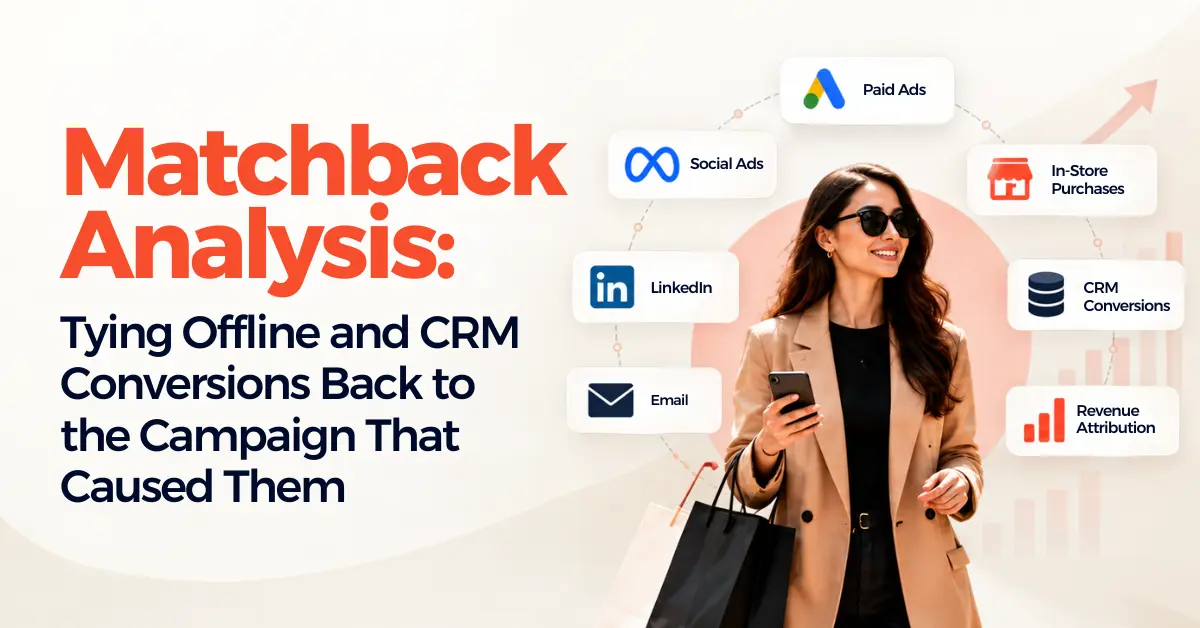
Server-side tracking through Google Tag Manager cuts browser-based data loss. Offline conversion imports from a CRM connect what happened after the lead to what the campaign gets credit for. Running Google Ads data alongside GA4 and checking both against actual backend sales every week is the only real way to catch gaps before months of work go in the wrong direction.
What to Look for in a Pay Per Click Advertising Agency
Full account access, honest reporting, and someone who explains decisions before making them.
Check if the pay per click advertising Agency shares the actual search terms report, not a summary of it. See if Quality Scores get discussed or quietly ignored. Ask what happens when a campaign underperforms. A real answer to that question tells you everything. Agencies that connect spend to pipeline are worth the conversation. Ones that lead with impressions and stop there aren’t managing the account. They’re filing reports about it.
Points to Remember
- PPC done properly is a weekly process. Search terms reviewed, bids adjusted, copy rotated, tracking verified. Nothing about that changes based on budget size.
- Quality Score above 7 cuts cost per click without increasing bids. Ad relevance and landing page alignment move it fastest.
- Tracking verified against real sales data is non-negotiable. A tag that fires is not the same as a tag that’s accurate.
- The right agency gives full account access and reports on the pipeline. Anything less is not management.
- Weekly work beats monthly check-ins. The data shifts faster than most people review it.
- Agencies connecting ad spend to actual revenue are the ones worth staying with. If that link cannot be shown clearly, the account is being watched, not managed.
FAQs
Q1. How long does it take PPC campaign management to show real ROI improvement?
Ans. Thirty days gives enough data to read what is working. Sixty to ninety days of consistent weekly work is where cost per conversion drops reliably. Accounts reviewed monthly instead of weekly take significantly longer to get there.
Q2. What Quality Score should you aim for on Google Ads?
Ans. Seven or above. Eight to ten means paying below market rate for clicks on that keyword. Below five means the ad, keyword, and landing page are misaligned, and the account pays a penalty every time that term triggers.
Q3. Is broad match worth using in 2026?
Ans. Depends on what’s underneath it. Clean conversion data in Smart Bidding plus a tight negative keyword list and it finds buyers exact match misses. Without both, it just spends faster on the wrong searches. Most accounts struggling with broad match have a setup problem, not a match type problem.
Q4. What is the single biggest waste of budget in a PPC account?
Ans. Broad match keywords running without negatives. Most accounts have it and most people don’t catch it until weeks of spend are already gone. The search terms report tells the story. Pull it up and look at what the account actually showed for last week. The list is usually surprising.