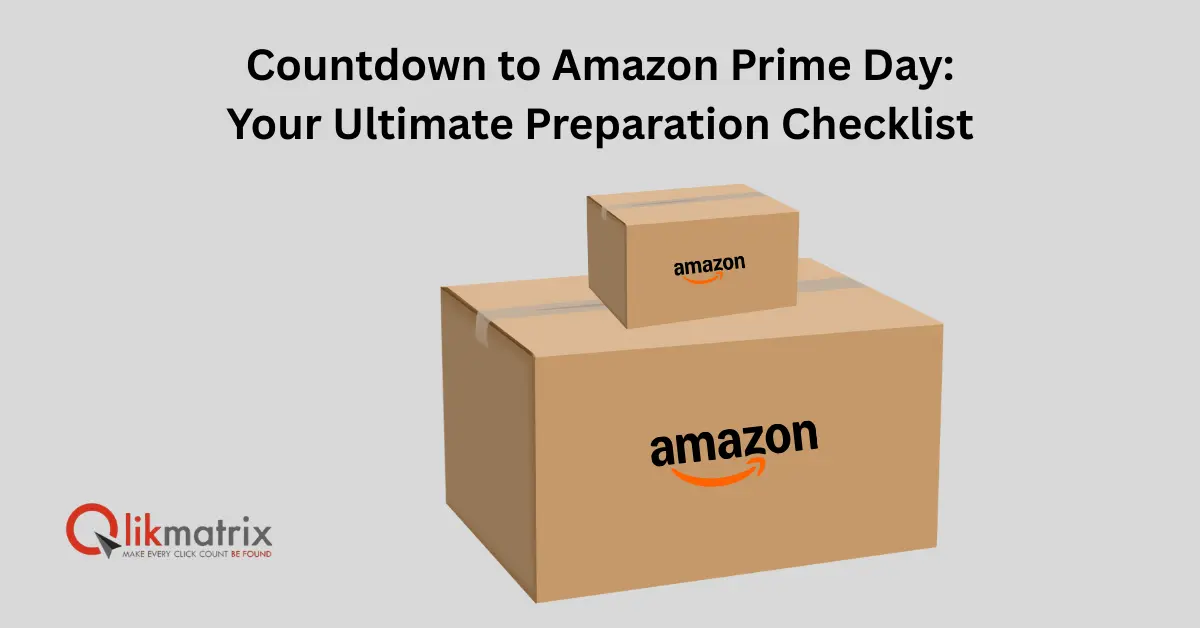
Countdown to Amazon Prime Day: Your Ultimate Preparation Checklist

Countdown to Amazon Prime Day in 2025

Get ready to maximize your sales during Amazon Prime Day with QlikMatrix’s cutting-edge AI-powered strategies. From PPC and DSP campaigns to brand protection and remarketing, we help you capture more traffic, boost ROI, and sustain momentum even after the event. Partner with us to unlock the full potential of data-driven digital marketing and make this Amazon Prime Day your most successful one yet.

Revolutionize your sales strategy with QlikMatrix’s cutting-edge AI solutions, designed to boost ROI and drive growth beyond expectations. For businesses looking to maximize sales during Amazon Prime Day, having a well-planned marketing strategy is crucial.

If you’re searching for a digital marketing agency in Gurgaon that delivers measurable results, QlikMatrix is your trusted partner. With expertise in Search and DSP strategies, we ensure your business thrives during this high-traffic shopping event.

Why Amazon Prime Day is Important for Your Business

Amazon Prime Day is one of the biggest online shopping events of the year. With millions of customers searching for deals, it presents a huge opportunity for brands to increase visibility, attract new customers, and drive revenue. However, success depends on a well-executed marketing plan that starts well before the event.

Search Strategies to Boost Sales

Start Early with PPC Ads. Begin running Amazon PPC ads at least two weeks before Amazon Prime Day. This warms up your target audience and increases product visibility.

Learn from Past Prime Days

Review past campaigns to identify which targeting strategies and ad formats worked best for your products.

Build Brand Awareness with Sponsored Brands

Promote bestsellers, highly-rated items, and limited-time deals in the lead-up days to increase brand visibility.

Strategic Targeting in Sponsored Product Campaigns

Use keywords, category targeting, ASIN targeting, and auto-targeting to reach a broader audience during the event.

Protect Your Brand

Bid on your own keywords and products in all ad types to maintain visibility and prevent competitors from taking over.

Increase Budgets for Greater Reach

Boost your advertising budgets during Amazon Prime Day to capture more traffic, engage a larger audience, and maximize sales potential.

Flash Deals and Inventory Management

Set up flash deals on products without existing Prime Day offers and ensure sufficient inventory to meet increased demand.

Cross-Sell with Sponsored Display Campaigns

Use precise targeting to cross-sell related products, increasing your average order value.

Monitor and Optimize Campaigns

Regularly review search term reports and optimize campaigns hourly to minimize wasted spend and maximize ROI.

Maintain Momentum with Lead-Out Days

Continue advertising even after Prime Day to capitalize on post-event sales opportunities.

DSP Strategies for Amazon Prime Day

Advertise Top-Selling ASINs

Ensure your best-selling products are fully advertised well before Prime Day to maximize exposure.

Utilize Engaging Creatives

Use video ads, Fire Tablet images, and lifestyle visuals to increase brand awareness and engagement.

Remarket and Prospect

Keep your brand top of mind for potential customers through remarketing and prospecting campaigns.

Create New Compelling Ads

Develop new creatives with attractive headlines and lifestyle imagery to convert visitors into buyers.

Leverage Amazon Data for Targeting

Use Amazon’s extensive data for programmatic ad placements across websites, ensuring highly targeted advertising.

Unlock Your Amazon Prime Day Potential

With QlikMatrix, you can transform your Amazon Prime Day campaigns into a powerful growth engine. Our data-driven approach helps you optimize every ad, target the right audience, and increase sales during one of the biggest e-commerce events of the year.

Ready to elevate your digital marketing strategies?

Contact QlikMatrix today to harness the power of AI-driven marketing and achieve exceptional results during Amazon Prime Day.

As a leader in Amazon Marketplace services and a top digital marketing agency, we ensure your brand dominates every sales event with precision and strategy.

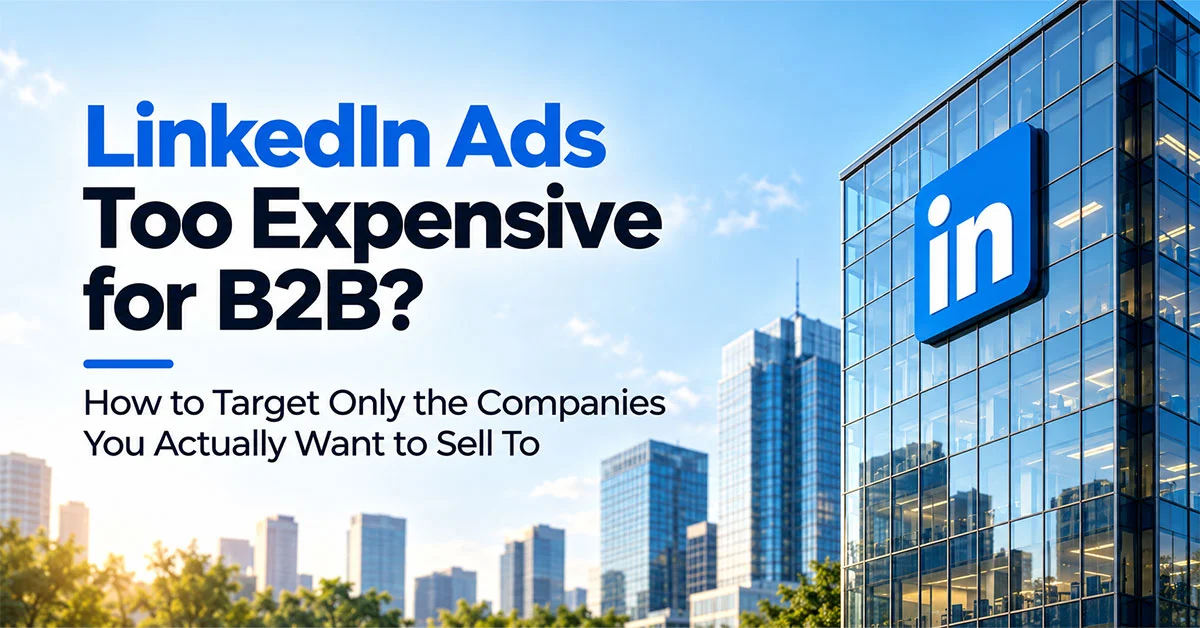
Q1. What is the most expensive online advertising mistake?

Ans. Audience targeting gone wrong, by a distance. A bad keyword wastes only the clicks it generates. Targeting the wrong people means every rupee goes to someone who was never going to buy. It doesn’t stop on its own. It runs until someone actually digs into who’s clicking and finds none of them were real prospects.

Q2. How often should campaigns be reviewed?

Ans. Every week for the first month without exception. After that, every two weeks at a minimum. The search terms report, audience performance breakdown, and creative fatigue all shift faster than a monthly review schedule can catch.

Q3. Does ad copy really change conversion rates that much?

Ans. The difference between two ads targeting the same audience with the same budget but different copy is regularly 200 to 400 percent in conversion rate. Copy is not a secondary consideration. It’s often the primary one.

Q4. How do I know if my conversion tracking is actually working?

Ans. Do a test conversion yourself. Check if it fires in real time inside your platform’s event manager. Then compare the conversion numbers from your ad platform against actual sales in your CRM every week. Consistent gaps between those two numbers mean something is broken in the tracking chain.

Some of the most expensive online advertising mistakes are sitting inside campaigns that look completely normal on the surface. Impressions coming in. Clicks happening. Budget spending cleanly. And underneath all of it, money going to the wrong people, for the wrong searches, tracked incorrectly, with copy that never had a chance.

Table of Contents

If you work with search engine marketing services or manage paid ads internally, this is where to look first.

1. Poor Audience Targeting

This mistake means paying for every click from people who were never going to buy. It doesn’t stay small. It scales with the budget.

A fitness brand running ads to everyone aged 18 to 65 interested in health is not targeting an audience. That’s broadcasting. Pull actual customer data. Who bought before? What age, location, device? Which pages did they visit before converting? Build lookalikes from real buyers on Meta, not from guesses about who might be interested. For B2B, LinkedIn’s job title and company size filters exist for a reason. Use them with behavioral data layered on top, not instead of it.

On Google, match types matter more in 2026 than most advertisers realise. Broad match without a solid negative keyword list shows ads for searches that have nothing to do with what you sell. Audience settings are not a one-time setup job. Review them every 30 days.

2. Wrong Keyword Selection

This is why campaigns look good in the dashboard and produce nothing in the bank account. Impressions up. Clicks up. Conversions flat.

Someone typing “how does retargeting work” is doing research. Someone typing “retargeting agency for ecommerce” is ready to talk to someone. Both live inside the same industry. Only one has buying intent. Bidding on both with the same budget treats research traffic like purchase traffic, and that’s where money disappears.

Good online advertising mistakes analysis starts with knowing which six areas drain the most money and in what order to fix them. Keyword intent is the first filter. Get it wrong here and everything downstream, the bids, the budget, the reporting, runs on bad inputs.

Negative keywords need to be built before the campaign launches, not discovered in the first week’s search terms report. “Free,” “DIY,” “how to,” and competitor names where you don’t want comparison traffic are the starting point, not the full list. Check the search terms report every week for the first month. What you think you’re targeting and what you’re actually showing for are different lists more often than not.

3. Lack of Conversion Tracking

No tracking means no real data. Every budget decision after that is a guess dressed up as a strategy.

The problem isn’t that advertisers skip tracking. It’s that they set it up wrong and never check whether it’s working. Page view is tracked instead of form submission. Most accounts have the tag firing on page load, not on actual form submission. Every false fire sits in your data as a real conversion, and you optimise against it without knowing. iOS 14 broke attribution in 2021 and most ad accounts still haven’t fixed it, which means Google Ads, Meta pixel, and GA4 are all showing different numbers, and none of them are complete.

Cross-reference them weekly against actual CRM data or backend sales numbers. If the numbers don’t match consistently, something in the tracking chain broke somewhere and you’re optimising campaigns based on wrong information.

4. Low Quality Ad Copy

This is what turns a perfectly targeted campaign into a money pit.

The pattern is almost always the same. The headline leads with the brand name. The body copy lists features. The language is vague. “High quality.” “Trusted.” “Industry-leading.” None of it means anything to someone who doesn’t already know you. And the person seeing your ad doesn’t know you yet.

In search, the headline has to match the intent behind the keyword. Someone searching for accounting software for a small business wants to see that reflected back, specifically, not a tagline that could apply to any software company on earth.

On social, the first two seconds are everything. A hook naming a specific problem the audience actually has, or a claim that catches them off guard, gets the read. A logo and a brand slogan does not. Run three different creative angles per ad set at a minimum. Pull the one that works and scale it. Replace the ones that don’t before they drain the budget.

FAQs

Q1. What is the most expensive online advertising mistake?

Ans. Audience targeting gone wrong, by a distance. A bad keyword wastes only the clicks it generates. Targeting the wrong people means every rupee goes to someone who was never going to buy. It doesn’t stop on its own. It runs until someone actually digs into who’s clicking and finds none of them were real prospects.

Q2. How often should campaigns be reviewed?

Ans. Every week for the first month without exception. After that, every two weeks at a minimum. The search terms report, audience performance breakdown, and creative fatigue all shift faster than a monthly review schedule can catch.

Q3. Does ad copy really change conversion rates that much?

Ans. The difference between two ads targeting the same audience with the same budget but different copy is regularly 200 to 400 percent in conversion rate. Copy is not a secondary consideration. It’s often the primary one.

Q4. How do I know if my conversion tracking is actually working?

Ans. Do a test conversion yourself. Check if it fires in real time inside your platform’s event manager. Then compare the conversion numbers from your ad platform against actual sales in your CRM every week. Consistent gaps between those two numbers mean something is broken in the tracking chain.

Request A Proposal

Our team will connect back with you within 24 hours.

Get In Touch