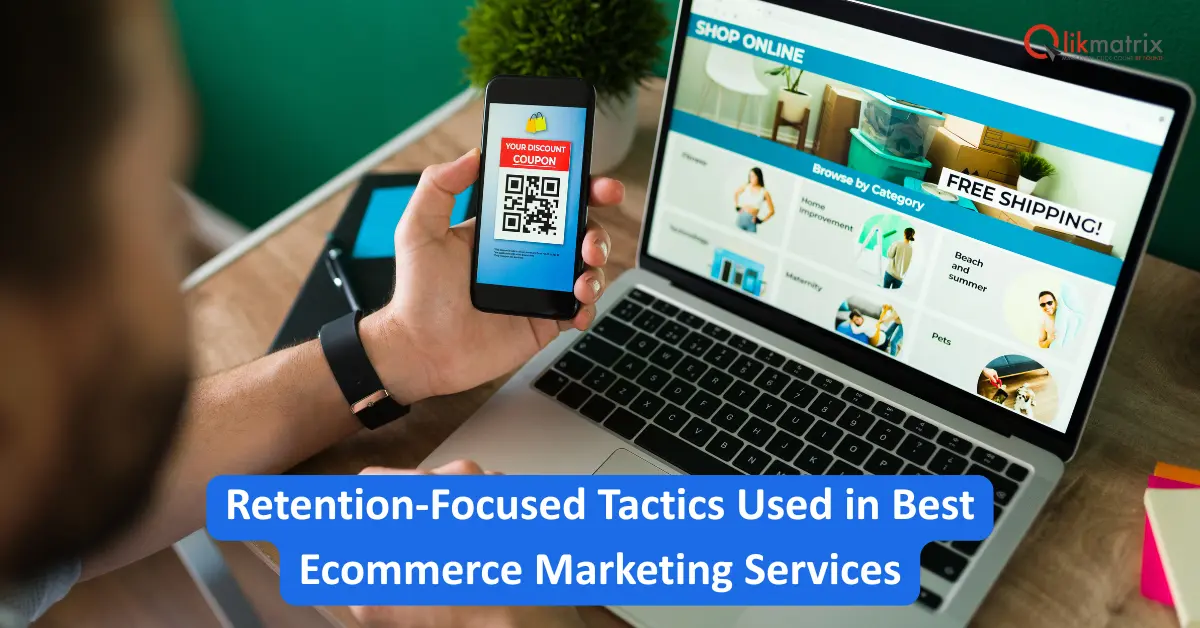
Retention-Focused Tactics Used in Best Ecommerce Marketing Service

Retention-Focused Tactics Used in Best Ecommerce Marketing Services

Online stores often focus on bringing people in for the first sale. Ads are run, offers go live, and even traffic increases. Yet, after checkout, many buyers quietly disappear, no second visit, no follow-up order, and no relationship. This silent drop-off creates a bigger challenge than low traffic. Growth feels unstable. Sales feel unpredictable. Marketing costs keep rising, but results don’t stay consistent.

This is where retention steps in. Retention is not about pushing offers. It is about keeping the connection alive after the first purchase. When handled with care, it helps online stores grow, reduce dependency on constant ads, and enhance overall customer value. This blog explores how retention works, why it matters, and how the best ecommerce marketing services approach retention in a practical, human way.

What Is Customer Retention?

Customer retention means keeping customers interlinked to a brand after their first buy. Instead of focusing only on new buyers, retention focuses on pre-existing ones. It encourages them to return, engage again, & continue purchasing over time.

Key ideas behind customer retention consists of:-

  • Maintaining relationships instead of chasing constant new sales
  • Reducing customer loss, often called churn
  • Creating trust through consistent experience

Retention works differently for different businesses. Some brands expect frequent repeat orders. Others see customers return only on special occasions. The time gap between purchases depends on what is being sold. Retention becomes easier to track when customer data is organized properly. Order history, engagement patterns, and return behavior help brands understand who stays and who leaves.

Understanding Ecommerce Customer Retention

Ecommerce customer retention focuses on online shoppers who return after their first order. Instead of bringing new people into the store, retention supports the bond with pre-existing buyers. The goal is to turn one-time shoppers into long-term customers.

Retention looks different across business models:

  • Subscription stores focus on continued plans
  • Product-based stores focus on repeat orders and upgrades
  • Loyalty programs focus on ongoing engagement

Retention is not fixed. It changes based on:

  • How often people buy
  • The type of products sold
  • Customer expectations

Because of this, retention needs a flexible and thoughtful approach. This is where ecommerce platform marketing growth becomes important. Growth is not only about reach. It is about keeping customers active and satisfied across platforms.

Why Ecommerce Customer Retention Matters?

Retention plays an important role in long-lasting business growth. When customers return, they already trust the brand. They understand the product. They need less convincing. This makes retention a powerful growth tool.

Key reasons retention matters:

  • Returning customers contribute more value over time
  • Dependence on constant advertising reduces
  • Revenue becomes more predictable
  • Brand trust strengthens naturally

Retention also builds advocacy. Happy customers share experiences, leave feedback, & recommend brands without being asked. This creates organic growth that ads alone cannot deliver. Strong retention also protects businesses during changes. Market shifts, platform updates, or rising ad costs impact brands less when loyal customers remain active.

Metrics for Measuring Customer Retention

Retention cannot improve without tracking the right signals. These metrics help understand customer behavior clearly.

Repeat Purchase Rate

Shows how often customers return after their first order. A steady rate means buyers find value and return willingly.

Customer Lifetime Value

This reflects the total value a customer brings during their relationship with a brand. Retention increases this naturally.

Churn Rate

Highlights how many customers stop buying over time. A rising churn rate signals experience or trust issues.

Average Order Value

Shows how order size changes over repeat purchases. Returning buyers often spend more as confidence grows.

Cohort Retention Analysis

Group customers by behavior or timing to see which groups stay longer. This reveals patterns that averages miss.

Together, these metrics guide smarter decisions and help customer lifetime value grow steadily.

Strategies of Ecommerce Customer Retention

1. Customized Email & Message Campaigns

Generic messages feel distant. Personalized communication feels familiar.

Effective approaches include:

  • Refill reminders
  • Follow-up thank-you messages
  • Product suggestions based on past behavior

These small touches show attention and care.

2. Loyalty & Reward Programs

Loyalty programs reward more than purchases; they reward engagement.

Strong programs focus on:

  • Milestone rewards
  • Exclusive access
  • Referral appreciation

This supports repeat purchase optimization without constant discounting.

3. Subscription and Auto-Replenishment Options

Subscriptions remove friction. Customers don’t need to reorder manually.

Retention improves when:

  • Plans are flexible
  • Pausing is easier than canceling
  • Preferences are respected

Flexibility keeps trust intact.

4. Data-Driven Customization

Customization works best when it reflects real behavior. This includes:

  • Relevant product bundles
  • Smart recommendations
  • Timing-based offers

Data helps brands understand patterns, not assumptions.

5. Reliable Customer Support

Support experiences shape long-term trust.

Retention improves when:

  • Responses are timely
  • Issues are resolved clearly
  • Communication feels human

Service is not a cost. It is part of retention.

6. Feedback and Listening Systems

Retention depends on listening.

Feedback tools help brands:

  • Identify dissatisfaction early
  • Improve experiences quickly
  • Show customers they matter

Action builds loyalty more than surveys alone.

7. Omnichannel Engagement

Customers interact across many platforms.

Consistency matters across:

  • Email
  • Social platforms
  • Website experiences

Unified messaging keeps the brand recognizable and reliable.

8. Post-Purchase Engagement

Retention does not end at checkout.

Post-purchase support includes:

  • Order updates
  • Usage guidance
  • Helpful follow-ups

This reduces uncertainty and encourages return visits.

9. Predictive Churn Awareness

Advanced retention focuses on prevention.

By observing:

  • Engagement drops
  • Purchase gaps
  • Behavior changes

Brands can act early and rebuild interest before customers drift away.

Retention is not a single tactic. It is a mindset. When retention strategies align with customer behavior, growth becomes steady and predictable. The best ecommerce marketing services focus not only on visibility but on lasting engagement that supports customer retention strategies, strengthens customer lifetime value, and fuels long-term ecommerce platform marketing growth.

Conclusion

Retention succeeds when brands focus on relationships, and not transactions. Clear communication, engagement, and constant value keep customers interlinked naturally. QlikMatrix, the best ecommerce marketing agency, supports this approach by combining strategy, data, & innovation into retention-focused growth systems. From ecommerce marketing to analytics-driven insights, QlikMatrix assist brands move beyond short-term clicks and build lasting customer relationships that support sustainable performance.


Q1. What is the most expensive online advertising mistake?

Ans. Audience targeting gone wrong, by a distance. A bad keyword wastes only the clicks it generates. Targeting the wrong people means every rupee goes to someone who was never going to buy. It doesn’t stop on its own. It runs until someone actually digs into who’s clicking and finds none of them were real prospects.

Q2. How often should campaigns be reviewed?

Ans. Every week for the first month without exception. After that, every two weeks at a minimum. The search terms report, audience performance breakdown, and creative fatigue all shift faster than a monthly review schedule can catch.

Q3. Does ad copy really change conversion rates that much?

Ans. The difference between two ads targeting the same audience with the same budget but different copy is regularly 200 to 400 percent in conversion rate. Copy is not a secondary consideration. It’s often the primary one.

Q4. How do I know if my conversion tracking is actually working?

Ans. Do a test conversion yourself. Check if it fires in real time inside your platform’s event manager. Then compare the conversion numbers from your ad platform against actual sales in your CRM every week. Consistent gaps between those two numbers mean something is broken in the tracking chain.

Related Blogs

Some of the most expensive online advertising mistakes are sitting inside campaigns that look completely normal on the surface. Impressions coming in. Clicks happening. Budget spending cleanly. And underneath all of it, money going to the wrong people, for the wrong searches, tracked incorrectly, with copy that never had a chance.

Table of Contents

If you work with search engine marketing services or manage paid ads internally, this is where to look first.

1. Poor Audience Targeting

This mistake means paying for every click from people who were never going to buy. It doesn’t stay small. It scales with the budget.

A fitness brand running ads to everyone aged 18 to 65 interested in health is not targeting an audience. That’s broadcasting. Pull actual customer data. Who bought before? What age, location, device? Which pages did they visit before converting? Build lookalikes from real buyers on Meta, not from guesses about who might be interested. For B2B, LinkedIn’s job title and company size filters exist for a reason. Use them with behavioral data layered on top, not instead of it.

On Google, match types matter more in 2026 than most advertisers realise. Broad match without a solid negative keyword list shows ads for searches that have nothing to do with what you sell. Audience settings are not a one-time setup job. Review them every 30 days.

2. Wrong Keyword Selection

This is why campaigns look good in the dashboard and produce nothing in the bank account. Impressions up. Clicks up. Conversions flat.

Someone typing “how does retargeting work” is doing research. Someone typing “retargeting agency for ecommerce” is ready to talk to someone. Both live inside the same industry. Only one has buying intent. Bidding on both with the same budget treats research traffic like purchase traffic, and that’s where money disappears.

Good online advertising mistakes analysis starts with knowing which six areas drain the most money and in what order to fix them. Keyword intent is the first filter. Get it wrong here and everything downstream, the bids, the budget, the reporting, runs on bad inputs.

Negative keywords need to be built before the campaign launches, not discovered in the first week’s search terms report. “Free,” “DIY,” “how to,” and competitor names where you don’t want comparison traffic are the starting point, not the full list. Check the search terms report every week for the first month. What you think you’re targeting and what you’re actually showing for are different lists more often than not.

3. Lack of Conversion Tracking

No tracking means no real data. Every budget decision after that is a guess dressed up as a strategy.

The problem isn’t that advertisers skip tracking. It’s that they set it up wrong and never check whether it’s working. Page view is tracked instead of form submission. Most accounts have the tag firing on page load, not on actual form submission. Every false fire sits in your data as a real conversion, and you optimise against it without knowing. iOS 14 broke attribution in 2021 and most ad accounts still haven’t fixed it, which means Google Ads, Meta pixel, and GA4 are all showing different numbers, and none of them are complete.

Cross-reference them weekly against actual CRM data or backend sales numbers. If the numbers don’t match consistently, something in the tracking chain broke somewhere and you’re optimising campaigns based on wrong information.

4. Low Quality Ad Copy

This is what turns a perfectly targeted campaign into a money pit.

The pattern is almost always the same. The headline leads with the brand name. The body copy lists features. The language is vague. “High quality.” “Trusted.” “Industry-leading.” None of it means anything to someone who doesn’t already know you. And the person seeing your ad doesn’t know you yet.

In search, the headline has to match the intent behind the keyword. Someone searching for accounting software for a small business wants to see that reflected back, specifically, not a tagline that could apply to any software company on earth.

On social, the first two seconds are everything. A hook naming a specific problem the audience actually has, or a claim that catches them off guard, gets the read. A logo and a brand slogan does not. Run three different creative angles per ad set at a minimum. Pull the one that works and scale it. Replace the ones that don’t before they drain the budget.

FAQs

Q1. What is the most expensive online advertising mistake?

Ans. Audience targeting gone wrong, by a distance. A bad keyword wastes only the clicks it generates. Targeting the wrong people means every rupee goes to someone who was never going to buy. It doesn’t stop on its own. It runs until someone actually digs into who’s clicking and finds none of them were real prospects.

Q2. How often should campaigns be reviewed?

Ans. Every week for the first month without exception. After that, every two weeks at a minimum. The search terms report, audience performance breakdown, and creative fatigue all shift faster than a monthly review schedule can catch.

Q3. Does ad copy really change conversion rates that much?

Ans. The difference between two ads targeting the same audience with the same budget but different copy is regularly 200 to 400 percent in conversion rate. Copy is not a secondary consideration. It’s often the primary one.

Q4. How do I know if my conversion tracking is actually working?

Ans. Do a test conversion yourself. Check if it fires in real time inside your platform’s event manager. Then compare the conversion numbers from your ad platform against actual sales in your CRM every week. Consistent gaps between those two numbers mean something is broken in the tracking chain.

Request A Proposal

Our team will connect back with you within 24 hours.

Get In Touch