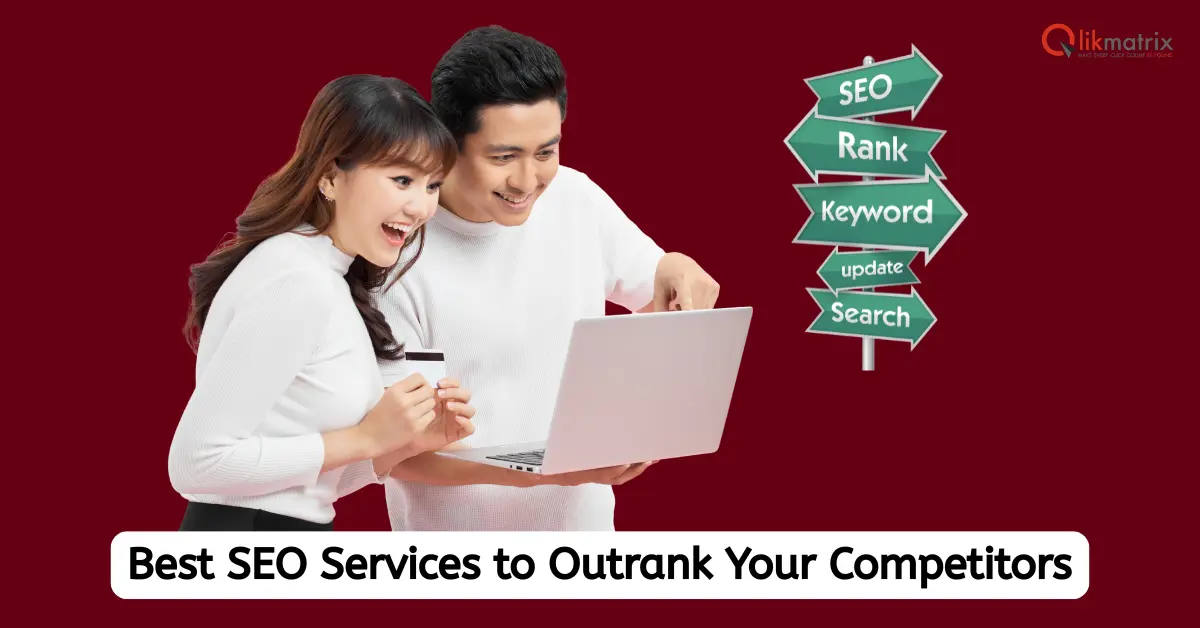
Best SEO Services to Outrank Your Competitors

Best SEO Services to Outrank Your Competitors

Your competitors are not better than you. They are simply more visible.

When someone searches for your product, service, or solution, Google decides who gets seen first.

Visibility wins.

And that visibility is not accidental. It is built deliberately through the best search engine optimization services.

Keywords alone will not keep you ahead. Sustainable growth requires structure, authority, and disciplined strategy.

So the real question is this:

1. Are you trying to rank for keywords or are you building authority that cannot be ignored?

Many businesses ask:

  • “What keywords should we target?”

The smarter question is:

  • “Why does Google trust our competitor?”

The best search engine optimization services begin with competitive authority mapping. They examine:

  • Who owns your niche?
  • How deep is their content ecosystem?
  • What topics support their main services?
  • Where do their backlinks come from?

Example:

A B2B consulting firm wanted to rank for “enterprise risk management services.” Instead of optimising one page, their SEO team created:

  • Industry-specific case studies
  • Risk trend insights
  • Regulatory compliance guides
  • Executive decision frameworks

Within 8–10 months, they didn’t just rank. They displaced competitors across multiple related keywords.

Ranking is not about one page. It is about category control.

2. Is Your Website Structurally Strong Enough to Compete?

Here is a question few founders ask:

If Google crawled your site today, would it clearly understand what you offer?

The best search engine optimization services prioritise technical clarity before content expansion.

They fix:

  • Page speed delays
  • Broken internal link flows
  • Poor mobile responsiveness
  • Thin page structures
  • Crawl inefficiencies

Example:

A store that sells things online spent a lot of money on content marketing. The rankings were unaltered. After fixing the website structure and making it load faster, rankings improved — even without new content.

Why? Because Google ranks websites that are easy to read and trust.

SEO starts with structure.

3. Are You Building Traffic or Building Momentum?

Traffic feels impressive in reports.

But here’s the real question:

  • Does that traffic bring buying intent closer?

Strong organic traffic growth services are layered around search behaviour, not just volume.

They build:

  • Informational entry points
  • Commercial comparison pages
  • Decision-stage landing pages
  • Trust-building content clusters

Example:

A SaaS company tried ranking for “buy HR software.” It struggled.

When they added:

  • “HR software for startups”
  • “HR software vs spreadsheets”
  • “Common HR automation mistakes”

Authority increased. Transactional rankings followed.

Organic growth compounds when intent supports intent.

4. What Do Real SEO Strategies To Rank #1 On Google Look Like?

Most agencies say they use proven strategies.

But what does that actually involve?

The strongest SEO strategies to rank #1 on Google combine:

  • Topic clustering
  • Competitive gap identification
  • Authority backlink building
  • Continuous content refresh
  • UX improvement

Example:

A healthcare brand updated its core pages every quarter with new research and FAQs. Competitors left theirs untouched.

Within a year, rankings shifted in favour of the active brand.

Google rewards consistency and relevance.

5. Are Your Backlinks Building Credibility or Risk?

Here’s a critical evaluation point:

  • Is your backlink profile strengthening authority or creating instability?

The best search engine optimization services focus on earning authority, not purchasing visibility.

They prioritise:

  • Industry media placements
  • Expert commentary
  • Research-driven PR campaigns
  • Editorial collaborations

Example:

Two fintech brands launched at the same time.

One purchased hundreds of backlinks quickly.

The other earned 15 high-quality media mentions.

After a major algorithm update, one lost traffic. The other gained.

Authority survives updates.

Shortcuts do not.

6. Do You Have a Long-term SEO Growth Strategy or Short-term Activity?

SEO dominance is not a campaign. It is a position.

A structured long-term SEO growth strategy typically unfolds in phases:

  • Phase 1: Technical clean-up
  • Phase 2: Authority content expansion
  • Phase 3: Strategic link acquisition
  • Phase 4: Conversion optimisation alignment

Example:

An education platform invested consistently for 18 months. Early growth was gradual. By month twelve, rankings accelerated. By month eighteen, organic traffic doubled.

Compounding takes time.

But once momentum builds, displacement becomes difficult.

7. Are You Measuring Rankings or Measuring Revenue?

The strongest question you can ask an agency is this:

  • Can you connect SEO performance directly to revenue impact?

The best search engine optimization services measure:

  • Organic lead generation
  • Conversion rates
  • Revenue attribution
  • Assisted conversions
  • Customer acquisition cost

Example:

Two companies ranked for similar terms.

One generated 220 qualified leads monthly.

The other generated 60.

The difference was not ranking. It was conversion alignment.

Visibility without conversion strategy is incomplete.

8. Is User Experience Helping You Win?

Google observes behaviour signals.

If users:

  • Leave quickly
  • Fail to scroll
  • Do not click internally
  • Abandon without interaction
  • Rankings weaken

Smart SEO integrates UX refinement:

  • Clear formatting
  • Logical flow
  • Strategic internal links
  • Readable structures

Example:

A B2B software company reduced bounce rate by restructuring long pages into digestible sections. Engagement improved. Rankings stabilised.

Engagement reinforces authority.

Points to Remember

  • The best search engine optimization services focus on authority, not isolated keywords.
  • Effective SEO strategies to rank #1 on Google rely on topical depth and competitive gaps.
  • Strong organic traffic growth services align traffic with buying intent.
  • A structured long-term SEO growth strategy compounds over time.
  • Backlink quality outweighs backlink volume.
  • Revenue metrics matter more than ranking reports.
  • UX optimisation strengthens ranking durability.

Outranking competitors is about doing smarter SEO.

Google does not reward effort. It rewards clarity, authority, and consistency.

If your strategy does not systematically reduce your competitors’ visibility over time, it is not aggressive enough.

Search positioning is not marketing; it is competitive power. And power in search is built deliberately.

Q1. What is the most expensive online advertising mistake?

Ans. Audience targeting gone wrong, by a distance. A bad keyword wastes only the clicks it generates. Targeting the wrong people means every rupee goes to someone who was never going to buy. It doesn’t stop on its own. It runs until someone actually digs into who’s clicking and finds none of them were real prospects.

Q2. How often should campaigns be reviewed?

Ans. Every week for the first month without exception. After that, every two weeks at a minimum. The search terms report, audience performance breakdown, and creative fatigue all shift faster than a monthly review schedule can catch.

Q3. Does ad copy really change conversion rates that much?

Ans. The difference between two ads targeting the same audience with the same budget but different copy is regularly 200 to 400 percent in conversion rate. Copy is not a secondary consideration. It’s often the primary one.

Q4. How do I know if my conversion tracking is actually working?

Ans. Do a test conversion yourself. Check if it fires in real time inside your platform’s event manager. Then compare the conversion numbers from your ad platform against actual sales in your CRM every week. Consistent gaps between those two numbers mean something is broken in the tracking chain.

Related Blogs

Some of the most expensive online advertising mistakes are sitting inside campaigns that look completely normal on the surface. Impressions coming in. Clicks happening. Budget spending cleanly. And underneath all of it, money going to the wrong people, for the wrong searches, tracked incorrectly, with copy that never had a chance.

Table of Contents

If you work with search engine marketing services or manage paid ads internally, this is where to look first.

1. Poor Audience Targeting

This mistake means paying for every click from people who were never going to buy. It doesn’t stay small. It scales with the budget.

A fitness brand running ads to everyone aged 18 to 65 interested in health is not targeting an audience. That’s broadcasting. Pull actual customer data. Who bought before? What age, location, device? Which pages did they visit before converting? Build lookalikes from real buyers on Meta, not from guesses about who might be interested. For B2B, LinkedIn’s job title and company size filters exist for a reason. Use them with behavioral data layered on top, not instead of it.

On Google, match types matter more in 2026 than most advertisers realise. Broad match without a solid negative keyword list shows ads for searches that have nothing to do with what you sell. Audience settings are not a one-time setup job. Review them every 30 days.

2. Wrong Keyword Selection

This is why campaigns look good in the dashboard and produce nothing in the bank account. Impressions up. Clicks up. Conversions flat.

Someone typing “how does retargeting work” is doing research. Someone typing “retargeting agency for ecommerce” is ready to talk to someone. Both live inside the same industry. Only one has buying intent. Bidding on both with the same budget treats research traffic like purchase traffic, and that’s where money disappears.

Good online advertising mistakes analysis starts with knowing which six areas drain the most money and in what order to fix them. Keyword intent is the first filter. Get it wrong here and everything downstream, the bids, the budget, the reporting, runs on bad inputs.

Negative keywords need to be built before the campaign launches, not discovered in the first week’s search terms report. “Free,” “DIY,” “how to,” and competitor names where you don’t want comparison traffic are the starting point, not the full list. Check the search terms report every week for the first month. What you think you’re targeting and what you’re actually showing for are different lists more often than not.

3. Lack of Conversion Tracking

No tracking means no real data. Every budget decision after that is a guess dressed up as a strategy.

The problem isn’t that advertisers skip tracking. It’s that they set it up wrong and never check whether it’s working. Page view is tracked instead of form submission. Most accounts have the tag firing on page load, not on actual form submission. Every false fire sits in your data as a real conversion, and you optimise against it without knowing. iOS 14 broke attribution in 2021 and most ad accounts still haven’t fixed it, which means Google Ads, Meta pixel, and GA4 are all showing different numbers, and none of them are complete.

Cross-reference them weekly against actual CRM data or backend sales numbers. If the numbers don’t match consistently, something in the tracking chain broke somewhere and you’re optimising campaigns based on wrong information.

4. Low Quality Ad Copy

This is what turns a perfectly targeted campaign into a money pit.

The pattern is almost always the same. The headline leads with the brand name. The body copy lists features. The language is vague. “High quality.” “Trusted.” “Industry-leading.” None of it means anything to someone who doesn’t already know you. And the person seeing your ad doesn’t know you yet.

In search, the headline has to match the intent behind the keyword. Someone searching for accounting software for a small business wants to see that reflected back, specifically, not a tagline that could apply to any software company on earth.

On social, the first two seconds are everything. A hook naming a specific problem the audience actually has, or a claim that catches them off guard, gets the read. A logo and a brand slogan does not. Run three different creative angles per ad set at a minimum. Pull the one that works and scale it. Replace the ones that don’t before they drain the budget.

FAQs

Q1. What is the most expensive online advertising mistake?

Ans. Audience targeting gone wrong, by a distance. A bad keyword wastes only the clicks it generates. Targeting the wrong people means every rupee goes to someone who was never going to buy. It doesn’t stop on its own. It runs until someone actually digs into who’s clicking and finds none of them were real prospects.

Q2. How often should campaigns be reviewed?

Ans. Every week for the first month without exception. After that, every two weeks at a minimum. The search terms report, audience performance breakdown, and creative fatigue all shift faster than a monthly review schedule can catch.

Q3. Does ad copy really change conversion rates that much?

Ans. The difference between two ads targeting the same audience with the same budget but different copy is regularly 200 to 400 percent in conversion rate. Copy is not a secondary consideration. It’s often the primary one.

Q4. How do I know if my conversion tracking is actually working?

Ans. Do a test conversion yourself. Check if it fires in real time inside your platform’s event manager. Then compare the conversion numbers from your ad platform against actual sales in your CRM every week. Consistent gaps between those two numbers mean something is broken in the tracking chain.

Request A Proposal

Our team will connect back with you within 24 hours.

Get In Touch