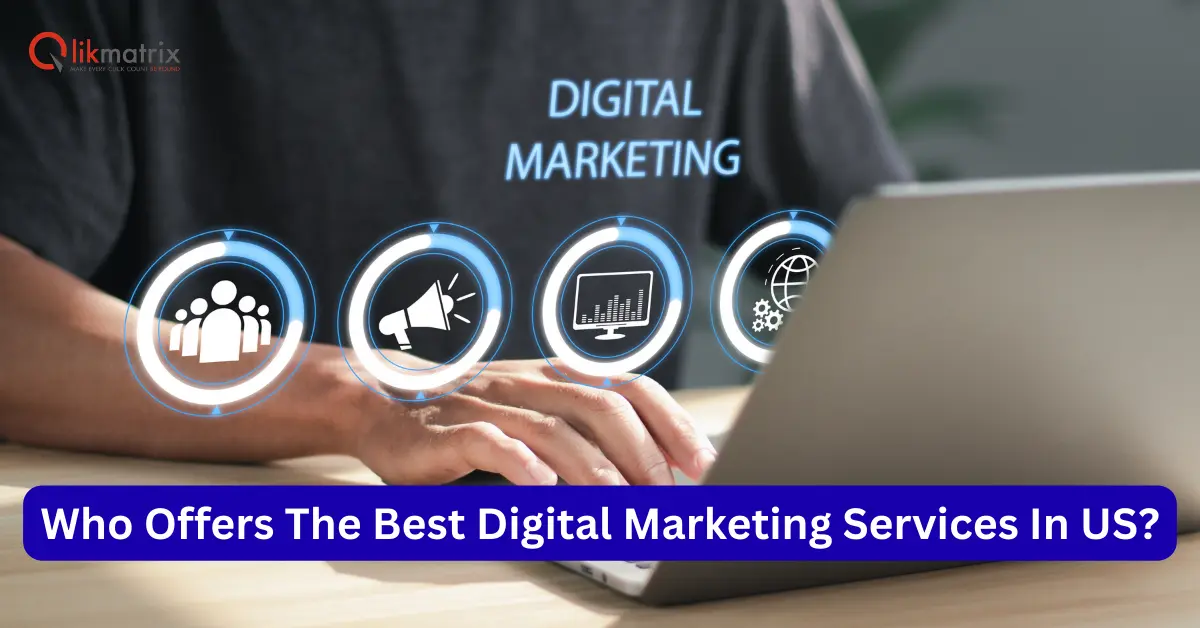
Digital marketing has changed the way businesses grow in the US. Now, they go online to search before buying and compare brands before making a decision and trust digital content instead of old-school advertising. Given this massive paradigm shift, companies now require powerful digital marketing services in order to maintain visibility, compete and win customers.
But here’s the real challenge, there are thousands of digital marketing agencies in the United States. All promise results. All say they’re the best. So, who is providing the right combination of skills, innovation, cost and support? That’s what we’re here to discover.
This guide will take you through what to look for, what matters most & how to determine which agency is the right choice for your business.
Why Digital Marketing Matters Today?
If your customers have moved online, then businesses must move online too. Digital marketing links brands with buyers via social media, search engines, email, and content as well as advertising.
Strong digital marketing services help businesses:
- Reach new audiences
- Build awareness
- Increase website traffic
- Get more leads and sales
- Improve brand loyalty
Many brands struggle because they try to manage digital growth alone. But capable agencies understand how to make more money, faster, using strategy, data, and creativity.
Now that you know why digital marketing is important, the next step is to determine what makes a great agency stand out.
Features of a Good Digital Marketing Agency
Not all service providers are the same. A strong team brings a mix of strategy, creativity, and technology.
Good agencies usually offer:
- SEO
- PPC
- Social media marketing
- Email campaigns
- Content strategy
- Analytics
- Website optimisation
These services work together to improve performance.
A great agency focuses on growth, not vanity metrics. They care more about leads and revenue than likes and impressions.
Once you know what good agencies do, it becomes easier to compare options across the US.
Top Qualities to Look For in a US Digital Marketing Agency
1. Proof of Real Results
Look for case studies, data, & examples. If an agency has improved sales for past clients, that’s a strong sign.
If they cannot show results, you may want to keep looking.
2. Industry Knowledge
Experience in your field saves time. It improves targeting, messaging, and planning.
3. Clear Reporting
Good reporting builds trust. It highlights what worked, what didn’t and what happens next.
These characteristics are a great starting point, but the next section narrows down your choices even more.
What Makes an Agency Stand Out in the US?
A top agency doesn’t only offer marketing tasks; it offers business growth.
They:
- Understand the US consumer market
- Track trends
- Adjust strategies quickly
- Test ideas instead of guessing
- Use data tools
- Follow ethical practices
In a fast-moving market, flexibility matters. Some businesses need aggressive lead generation. Others need branding. Some want ecommerce growth.
The right match depends on goals & budget.
Now that you understand what excellence looks like, let’s explore how digital marketing services turn into real results.
Services That Drive Growth in the US Market
Good marketing agencies offer service packages built around customer behaviour.
These usually include:
- Search engine optimization
- Paid ads
- Social strategy
- Creative design
- Email sequences
- Copywriting and video marketing
- Website performance
- Market analytics
These services work together. One channel brings traffic, another converts it, and another keeps customers loyal.
When these pieces align, digital marketing becomes more powerful than any single strategy.
Now that we’ve covered services, let’s look at what makes the US market unique.
Why the US is Home to Leading Digital Agencies?
The US has one of the strongest digital economies in the world. Businesses demand innovation and speed. Consumers expect easy digital experiences.
This pressure pushes agencies to improve constantly. That’s why so many US companies offer innovative plans and unique ideas, not generic templates.
To begin your career in digital marketing with the aid of professionals, choose from start-up, mid-size and established brands to find a partner that suits you best (and can afford).
Now, coming to the main point: Who offers the best digital marketing services?
Who Offers the Best Digital Marketing Services in US?
There isn’t just one agency that fits every business. The “best” depends on your goals.
Here’s how different US agencies stand out:
- Some focus on growth marketing
- Some specialise in social media
- Others lead in SEO
- Many offers strong PPC and ecommerce support
The key is to avoid one-size-fits-all packages. Instead, choose teams that personalise strategy based on market data and goals.
With that in mind, the US market offers many firms who deliver the top digital marketing services based on innovation, testing, and results.
Even when you do find options, you’re still left to take a final step: comparison.
How to Pick the Right Agency?
Before deciding on a partner, ask yourself these questions:
- Do they understand your industry?
- Can they show results?
- Do they provide honest reporting?
- Do they listen to your goals?
- Do they adjust strategies fast?
- Do they use updated tools?
A good agency will walk you through a plan, not force you into a contract.
Once you know how to choose, the next step is understanding what makes pricing different.
Pricing & Value in US Digital Marketing?
Costs vary. Some charge hourly rates. Some use monthly retainers. Some price by project.
Lower prices may look tempting, but strong marketing takes time. It involves planning, testing, optimizing, and reporting.
Real value comes from ROI, not cost.
The right partner improves leads, sales, and visibility. That return makes the investment worth it.
Now that we’ve covered selection and pricing, let’s look at marketing beyond ads & keywords.
The Bigger Picture: Online Brand Experience
In the US market, digital growth isn’t only about clicks. It’s about trust.
Strong brands:
- Connect with customers
- Speak clearly
- Stay consistent
- Build loyalty
- Stay active online
This is why many companies seek online marketing services that support brand growth across channels, not just single campaigns.
When strategy, design, ads, and messaging support each other, the customer journey becomes stronger.
Now that we see how digital work fits into a bigger picture, let’s wrap up with a final takeaway.
Conclusion
There are many agencies in the United States offering strong digital marketing services, but the best choice depends on goals, industry, and budget. Some companies want rapid traffic growth. Others want long-term customer engagement. Some need search support. Others need better brand visibility.
The right partner focuses on results, clarity, and strategy, not just activity. That’s why businesses look for the best digital marketing agency, a team that understands data, audience behaviour, and performance tracking.
When backed by smart planning and modern tools, the finest digital marketing services can transform any business. And with support from agencies providing the top digital marketing services, US brands can grow faster, reach new customers, and stay ahead of the competition.
So, who offers the best? The answer is simple: the agency that shares your interests, has transparent conversations, brings in results and views growth as a collective mission.