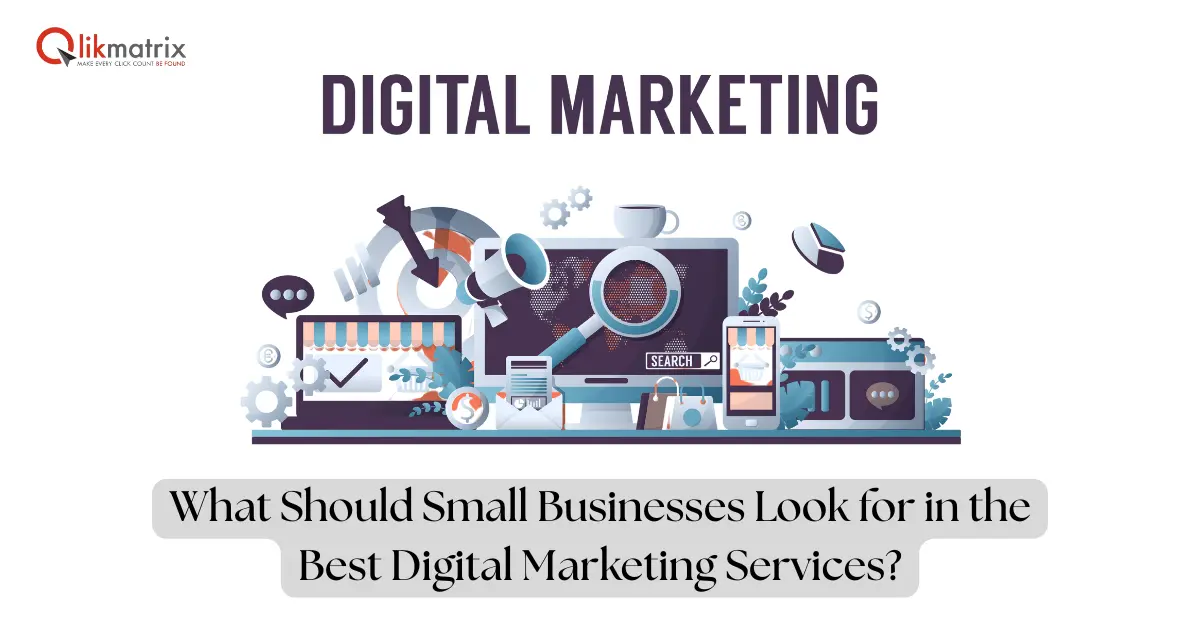
Running a small business might feel like handling several jobs at the same time. Sales need attention. Customers need answers. Products need improvement. Marketing usually gets pushed aside as it feels costly, confusing, or too technical. Several small business owners believe that marketing is only for big brands with large budgets.
But reality hits differently. Digital platforms have changed how businesses grow. Online channels now allow small businesses to reach the right people without spending huge amounts. With the right planning, even limited efforts can bring steady results. This is where the best digital marketing services matter.
Digital marketing is no longer about doing everything at the same time. It is about picking the right activities, using the right tools, and working with people who knows small business requirements.
Importance of Digital Marketing For Small Businesses
Initially, marketing was done by newspapers, banners, radio, and television. These approaches were costly and hard to measure. Digital marketing removed many of these limits and opened new doors
Some important reasons digital marketing plays a key role for small businesses include:
Direct connection with customers
Some social media platforms such as Instagram, LinkedIn,& WhatsApp helps businesses to interact directly with their audiences. Messages, reviews, and replies are a real time experience. Customer service improves naturally.
Clear understanding of customer behavior
Social media tools help to track what people are fond of, what things they respond to, and what they click on. Buying patterns become easier to understand.
No location limits
Online marketing removes borders. Businesses can reach people across cities, states, or even countries without being stressed about distance or time zones
Live tracking
Campaign performance can be checked instantly. Content can be adjusted when something is not working well.
Better control over spending
Digital campaigns allow small budgets. Spending can be increased or paused anytime.
With many options available, handling everything alone becomes difficult. This is where online marketing solutions offered by experienced teams help reduce confusion and workload.
Core Digital Marketing Services Every Small Business Needs
Not every service fits every business. Small businesses benefit most when focus stays on core online marketing solutions that bring steady growth.
1. Search Engine Optimization Services
Search engine optimization services enhances website visibility on search engines. The focus stays on:
- Website structure
- Relevant content
- Keyword placement
Search engine optimization services bring organic traffic over time. Visitors come naturally without paid ads. Consistent effort builds trust and long-term visibility.
2. Search Engine Marketing Services
Search engine marketing services focus on paid ads. These ads appear on platforms such as Google when people look for specific terms
Key benefits include:
- Paying only when someone clicks
- Immediate traffic
- Controlled budgets
SEM works well when quick visibility is needed.
3. Social Media Management
Social media platforms allow brands to stay active.
Main activities include:
- Regular posts
- Paid advertisements
- Audience interaction
This builds familiarity and customer loyalty over time.
4. Content Marketing
Content marketing focuses on useful and meaningful content.
Common formats include:
- Blogs
- Videos
- Reels
- eBooks
Good content educates people, builds trust, and supports other marketing efforts.
5. Email Marketing
Email marketing remains one of the most direct channels.
Uses include:
- Newsletters
- Offers
- Business updates
Emails help maintain relationships and encourage repeat actions.
Together, these services form the base of top digital marketing services for small businesses.
Advantages of Digital Marketing For Small Businesses
Digital marketing provides several practical benefits that match small business realities
Cost-effective approach
Traditional marketing methods demanded large spending. Digital channels allow better control.
- Paid ads work on click-based models
- SEO reduces dependency on constant ads
- Budgets stay flexible
- Better audience understanding
A professional digital marketing agency studies audience behavior.
This helps in:
- Understanding interests
- Identifying pain points
- Creating relevant content
Targeted messaging becomes easier and more effective.
Improved visibility
SEO plays a major role in online visibility.
Benefits are:-
- Higher search rankings
- Better brand recognition
- Increased credibility
Consistency strengthens trust in the long run.
Stronger engagement
Digital platforms allow two-way communication.
- Quick replies to messages
- Faster handling of feedback
- Stronger customer relationships
Engagement builds loyalty naturally.
Flexible strategies
Digital marketing adapts easily.
- Campaigns can be changed
- Content can be updated
- Platforms can be switched
Flexibility helps businesses stay relevant.
Measurable performance
Performance tracking removes guesswork.
- Clicks
- Conversions
- Engagement
What to Look for While Choosing Digital Marketing Agencies?
Choosing the right agency requires careful observation.
Key points to consider are:
Transparency
Clear explanation of process, pricing, and requirements
Customization
Strategies made according to business needs, not fixed packages
Data-driven planning
Decisions made by analytics and performance tracking
Continuous learning
Awareness of new trends and platforms
Collaboration
Partnership mindset instead of a vendor method
Regular reporting
Clear updates on campaign performance
Cultural alignment
Shared values and working style
Integrated way
Balance between online and offline marketing understanding
Clear explanation of digital vs traditional methods
Ability to guide on choosing the right mix
These things help to identify the best digital marketing service providers.
How to Select the Best Digital Marketing Agency for Small Businesses?
A structured approach helps in decision-making:
Define goals
Clarity comes first.
Common goals consists of:-
- Brand recognition
- Lead generation
- Sales improvement
Clear goals guide agency selection.
Research and shortlist agencies
Sources include:
- Search engines
- Industry directories
- Peer recommendations
Shortlisting saves time and effort.
Evaluate online presence
A strong agency practices what it offers.
Check for:
- Updated Google Business Profile
- Genuine Google reviews
- Strong SEO visibility
- Active social media presence
- Quality content
Online presence reflects expertise.
Assess services offered
Comprehensive services indicate capability.
Services may include:
- Content marketing
- SEO
- Reputation management
- Google PPC Ads
- Email marketing
- Social media management
- CRM and platform integrations
Balanced services helps in long-term growth.
Review case studies
Past work shows real capability.
Look for:
- Similar industries
- Clear outcomes
- Honest feedback
- Observe communication style
Good communication builds trust
Important factors:
- Response time
- Communication channels
- Dedicated contact person
- Easy meeting scheduling
- Compare proposals carefully
Evaluate:
- Strategy
- Timeline
- Pricing
Avoid rushed decisions.
Schedule consultations
Direct conversations help assess:
- Team understanding
- Cultural fit
- Working approach
Conclusion
Selecting the right partner has a big impact. Digital marketing works when strategy, and creativity come together. Clear planning, regular tracking, and honesty helps to grow.
QlikMatrix follows a structured approach built around:
- Discovering business needs
- Planning with purpose
- Executing campaigns with clarity
- Measuring results that matter
With experience across multiple industries, QlikMatrix, a professional digital marketing agency, focuses on meaningful connections, steady performance, and long-term growth. The goal stays simple, turn digital efforts into real business impact while keeping strategies clear and manageable for growing businesses.