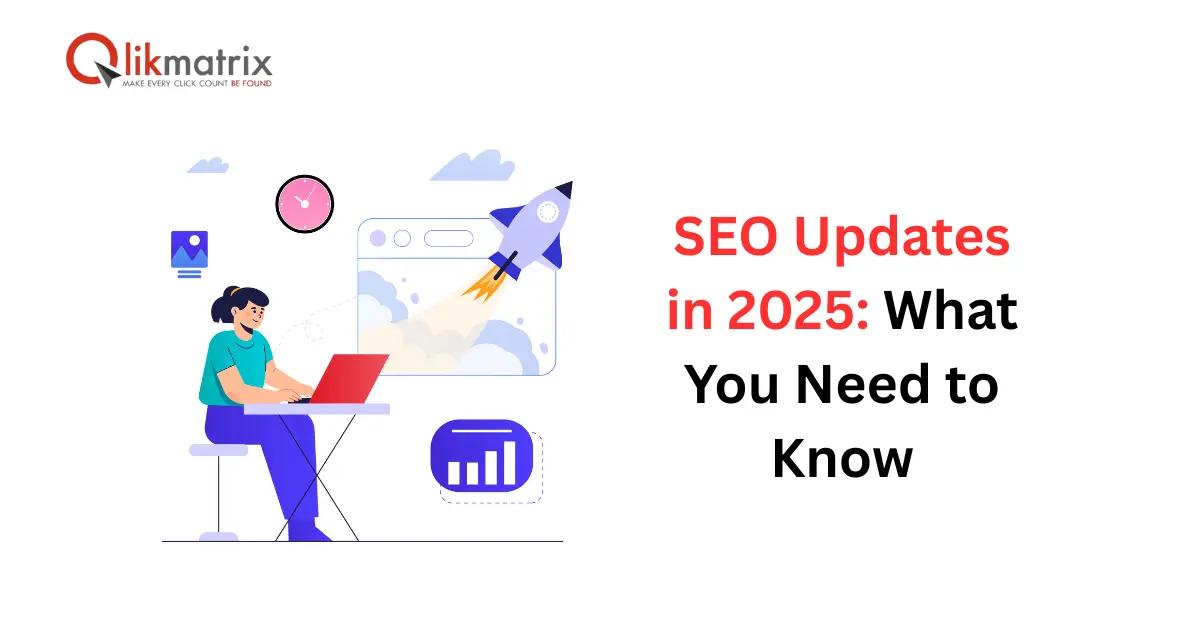
SEO Updates in 2025: What You Need to Know

SEO Updates in 2025

SEO Updates in 2025 are reshaping digital marketing with AI-driven algorithms, voice search optimization, Core Web Vitals, and mobile-first indexing—making the role of the best search engine optimization services more important than ever. Businesses must embrace SEO Updates in 2025 to stay visible and competitive in search results. This guide explores the latest trends, their impact on rankings, and how the right SEO strategy can future-proof your online presence.

SEO Updates in 2025: What Businesses Need to Know?

Did you know Google processes more than 3.5 billion searches per day? Search engines are becoming smarter, and keeping up with SEO Updates in 2025 has never been more important. From AI-driven algorithms to Google’s Core Web Vitals, businesses that adapt will thrive, while those that ignore these changes may lose visibility and revenue. In this guide, we’ll cover the key SEO Updates in 2025, how they impact digital marketing, and why partnering with experts is essential.

The Evolution of SEO Practices

SEO has changed dramatically over the years. In the early days, ranking depended heavily on keyword stuffing and building as many backlinks as possible. Today, search engines have shifted to rewarding quality, user-focused content instead of quantity.

Now, SEO is like a carefully balanced strategy where technical optimization, valuable content, and user experience work together. This evolution highlights why businesses must continuously adjust to search engine changes.

Major SEO Updates in 2025

1. AI-Driven Search Algorithms

Artificial Intelligence is at the center of SEO Updates in 2025. Search engines now use AI to understand user intent better than ever before. Instead of just matching keywords, AI analyzes behavior, preferences, and context to deliver personalized search results.

Businesses must use AI-powered tools to study search trends, predict user needs, and optimize content. Partnering with a skilled SEO or SEM agency ensures campaigns align with these advanced algorithms.

2. Voice Search Optimization

With the rise of smart speakers and voice assistants, voice search is transforming SEO. Users now speak queries in full, conversational sentences instead of typing short keywords.

For example, instead of typing “best dentist Delhi,” a voice search user might ask, “Who is the best dentist for root canal treatment in Delhi?”

This shift requires businesses to optimize for natural language, long-tail keywords, and question-based content. Adapting to this trend ensures visibility in a growing search segment.

3. Core Web Vitals

Google’s Core Web Vitals are performance metrics that directly affect rankings. They measure:

  • Loading Speed (Largest Contentful Paint)
  • Interactivity (First Input Delay)
  • Visual Stability (Cumulative Layout Shift)

Websites with slow loading times or poor usability risk dropping in rankings. Optimizing images, scripts, and layout is now essential. Meeting these standards not only improves SEO but also enhances user experience.

4. Mobile-First Indexing

In 2025, mobile-first indexing is no longer optional—it’s the standard. Google ranks websites based primarily on their mobile version.

If your site isn’t mobile-friendly, it may lose ranking power. Businesses must ensure responsive design, fast loading, and easy navigation on smartphones. Treat your mobile site as your “digital storefront,” since most users will experience it before your desktop site.

5. E-A-T (Expertise, Authoritativeness, Trustworthiness)

Content credibility plays a major role in SEO Updates in 2025. Search engines prioritize websites that demonstrate expertise, authority, and trust.

Businesses should focus on:

  • Publishing well-researched, expert-led content
  • Building backlinks from trusted websites
  • Maintaining strong brand reputation online
  • This is especially important for industries like healthcare, finance, and legal, where trust is a critical ranking factor.

The Risk of Ignoring SEO Updates in 2025

Failing to adapt to SEO Updates in 2025 is like navigating with an outdated map. Competitors who adopt AI, optimize for Core Web Vitals, and build authority will capture market share. Ignoring these trends leads to:

  • Lower visibility in search results
  • Reduced traffic
  • Missed business opportunities

Why Businesses Need Expert Guidance?

With SEO changing so quickly, businesses benefit greatly from working with an experienced SEO or SEM agency. Professionals can:

  • Stay updated on algorithm changes
  • Implement advanced tools and analytics
  • Develop strategies tailored to your target audience
  • Optimize websites technically and strategically

This ensures that your brand not only adapts but also stays ahead in the competitive digital space.

Conclusion

SEO Updates in 2025 highlight one truth—SEO is no longer about just ranking; it’s about delivering value, trust, and superior user experience. Businesses that adopt AI-driven strategies, voice search optimization, Core Web Vitals, mobile-first indexing, and E-A-T principles will maintain visibility and growth in the digital age.

To maximize results, partner with professionals who understand the changing landscape. If you are looking for the best SEO services or the best digital marketing agency, the right partner can help your business achieve lasting success.

Q1. What is the most expensive online advertising mistake?

Ans. Audience targeting gone wrong, by a distance. A bad keyword wastes only the clicks it generates. Targeting the wrong people means every rupee goes to someone who was never going to buy. It doesn’t stop on its own. It runs until someone actually digs into who’s clicking and finds none of them were real prospects.

Q2. How often should campaigns be reviewed?

Ans. Every week for the first month without exception. After that, every two weeks at a minimum. The search terms report, audience performance breakdown, and creative fatigue all shift faster than a monthly review schedule can catch.

Q3. Does ad copy really change conversion rates that much?

Ans. The difference between two ads targeting the same audience with the same budget but different copy is regularly 200 to 400 percent in conversion rate. Copy is not a secondary consideration. It’s often the primary one.

Q4. How do I know if my conversion tracking is actually working?

Ans. Do a test conversion yourself. Check if it fires in real time inside your platform’s event manager. Then compare the conversion numbers from your ad platform against actual sales in your CRM every week. Consistent gaps between those two numbers mean something is broken in the tracking chain.

Related Blogs

Some of the most expensive online advertising mistakes are sitting inside campaigns that look completely normal on the surface. Impressions coming in. Clicks happening. Budget spending cleanly. And underneath all of it, money going to the wrong people, for the wrong searches, tracked incorrectly, with copy that never had a chance.

Table of Contents

If you work with search engine marketing services or manage paid ads internally, this is where to look first.

1. Poor Audience Targeting

This mistake means paying for every click from people who were never going to buy. It doesn’t stay small. It scales with the budget.

A fitness brand running ads to everyone aged 18 to 65 interested in health is not targeting an audience. That’s broadcasting. Pull actual customer data. Who bought before? What age, location, device? Which pages did they visit before converting? Build lookalikes from real buyers on Meta, not from guesses about who might be interested. For B2B, LinkedIn’s job title and company size filters exist for a reason. Use them with behavioral data layered on top, not instead of it.

On Google, match types matter more in 2026 than most advertisers realise. Broad match without a solid negative keyword list shows ads for searches that have nothing to do with what you sell. Audience settings are not a one-time setup job. Review them every 30 days.

2. Wrong Keyword Selection

This is why campaigns look good in the dashboard and produce nothing in the bank account. Impressions up. Clicks up. Conversions flat.

Someone typing “how does retargeting work” is doing research. Someone typing “retargeting agency for ecommerce” is ready to talk to someone. Both live inside the same industry. Only one has buying intent. Bidding on both with the same budget treats research traffic like purchase traffic, and that’s where money disappears.

Good online advertising mistakes analysis starts with knowing which six areas drain the most money and in what order to fix them. Keyword intent is the first filter. Get it wrong here and everything downstream, the bids, the budget, the reporting, runs on bad inputs.

Negative keywords need to be built before the campaign launches, not discovered in the first week’s search terms report. “Free,” “DIY,” “how to,” and competitor names where you don’t want comparison traffic are the starting point, not the full list. Check the search terms report every week for the first month. What you think you’re targeting and what you’re actually showing for are different lists more often than not.

3. Lack of Conversion Tracking

No tracking means no real data. Every budget decision after that is a guess dressed up as a strategy.

The problem isn’t that advertisers skip tracking. It’s that they set it up wrong and never check whether it’s working. Page view is tracked instead of form submission. Most accounts have the tag firing on page load, not on actual form submission. Every false fire sits in your data as a real conversion, and you optimise against it without knowing. iOS 14 broke attribution in 2021 and most ad accounts still haven’t fixed it, which means Google Ads, Meta pixel, and GA4 are all showing different numbers, and none of them are complete.

Cross-reference them weekly against actual CRM data or backend sales numbers. If the numbers don’t match consistently, something in the tracking chain broke somewhere and you’re optimising campaigns based on wrong information.

4. Low Quality Ad Copy

This is what turns a perfectly targeted campaign into a money pit.

The pattern is almost always the same. The headline leads with the brand name. The body copy lists features. The language is vague. “High quality.” “Trusted.” “Industry-leading.” None of it means anything to someone who doesn’t already know you. And the person seeing your ad doesn’t know you yet.

In search, the headline has to match the intent behind the keyword. Someone searching for accounting software for a small business wants to see that reflected back, specifically, not a tagline that could apply to any software company on earth.

On social, the first two seconds are everything. A hook naming a specific problem the audience actually has, or a claim that catches them off guard, gets the read. A logo and a brand slogan does not. Run three different creative angles per ad set at a minimum. Pull the one that works and scale it. Replace the ones that don’t before they drain the budget.

FAQs

Q1. What is the most expensive online advertising mistake?

Ans. Audience targeting gone wrong, by a distance. A bad keyword wastes only the clicks it generates. Targeting the wrong people means every rupee goes to someone who was never going to buy. It doesn’t stop on its own. It runs until someone actually digs into who’s clicking and finds none of them were real prospects.

Q2. How often should campaigns be reviewed?

Ans. Every week for the first month without exception. After that, every two weeks at a minimum. The search terms report, audience performance breakdown, and creative fatigue all shift faster than a monthly review schedule can catch.

Q3. Does ad copy really change conversion rates that much?

Ans. The difference between two ads targeting the same audience with the same budget but different copy is regularly 200 to 400 percent in conversion rate. Copy is not a secondary consideration. It’s often the primary one.

Q4. How do I know if my conversion tracking is actually working?

Ans. Do a test conversion yourself. Check if it fires in real time inside your platform’s event manager. Then compare the conversion numbers from your ad platform against actual sales in your CRM every week. Consistent gaps between those two numbers mean something is broken in the tracking chain.

Request A Proposal

Our team will connect back with you within 24 hours.

Get In Touch