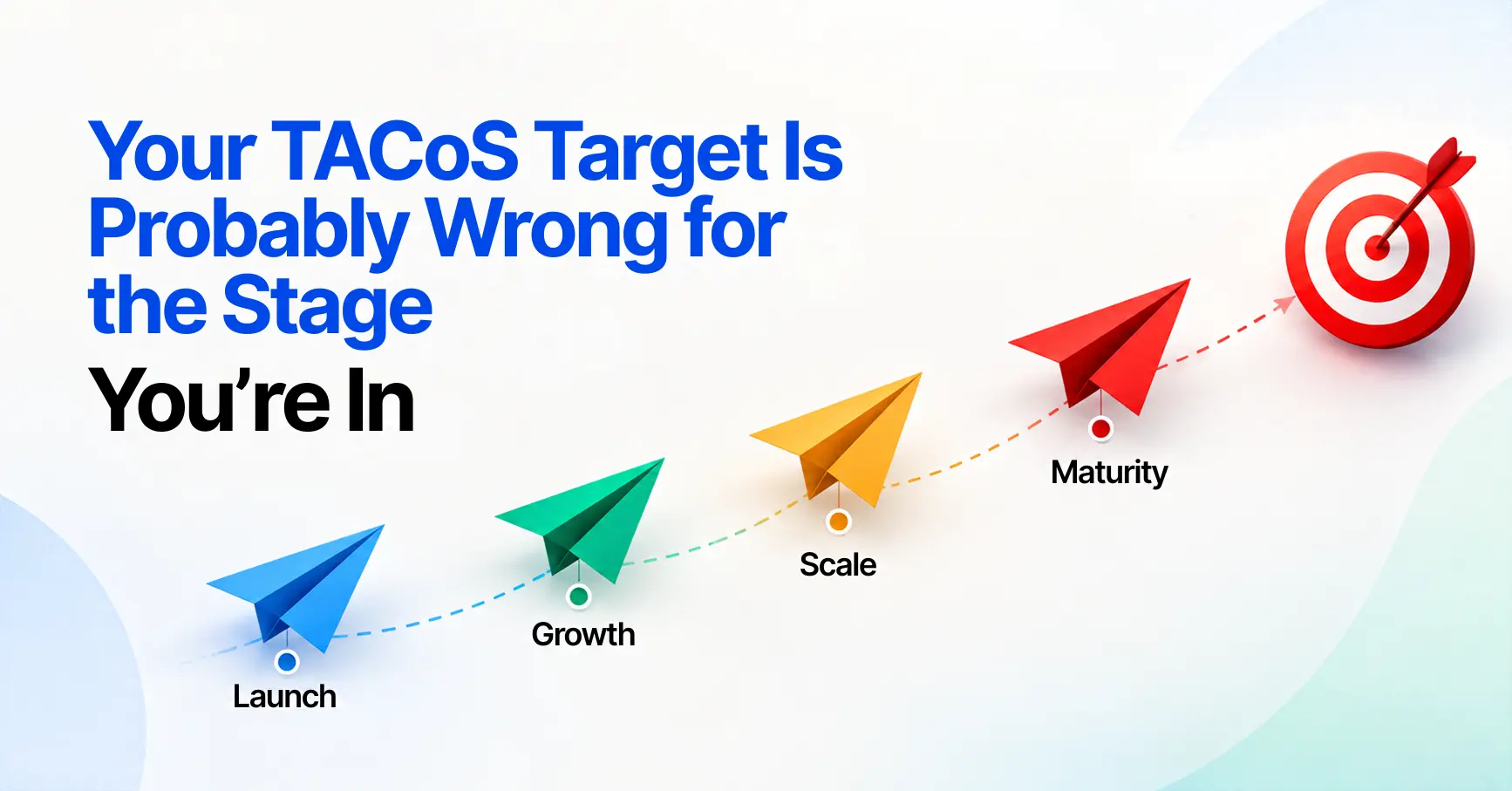
Your TACoS Target Is Probably Wrong for the Stage You’re In

Amazon TACoS Benchmark

There’s no Amazon TACoS benchmark that fits every brand. A product in launch will often sit at 25 to 40 percent while it builds organic rank, a growing brand more like 15 to 25, and a mature brand with strong organic sales somewhere between 8 and 15. Judge yourself by the wrong range and you’ll make the wrong calls.

You’ve probably sat through this conversation. Someone asks what a good TACoS on Amazon is and somebody else says “10 percent” like it’s settled science. Heads nod. A week later it’s a target, a month later it’s in the report, and now every product in the account gets graded against it whether that makes sense or not.

For a three-year-old brand with a few hundred reviews and decent organic rank, 10 percent is great. Lovely, even. For something that went live six weeks ago it’s not happening, and if you hold a launch to that number you’ll end up cutting ads right when they’re doing the most good.

TACoS moves as a brand grows up. It’s supposed to. The useful question is what’s good for where you actually are this month.

What Does TACoS Actually Tell You that Acos Doesn’t?

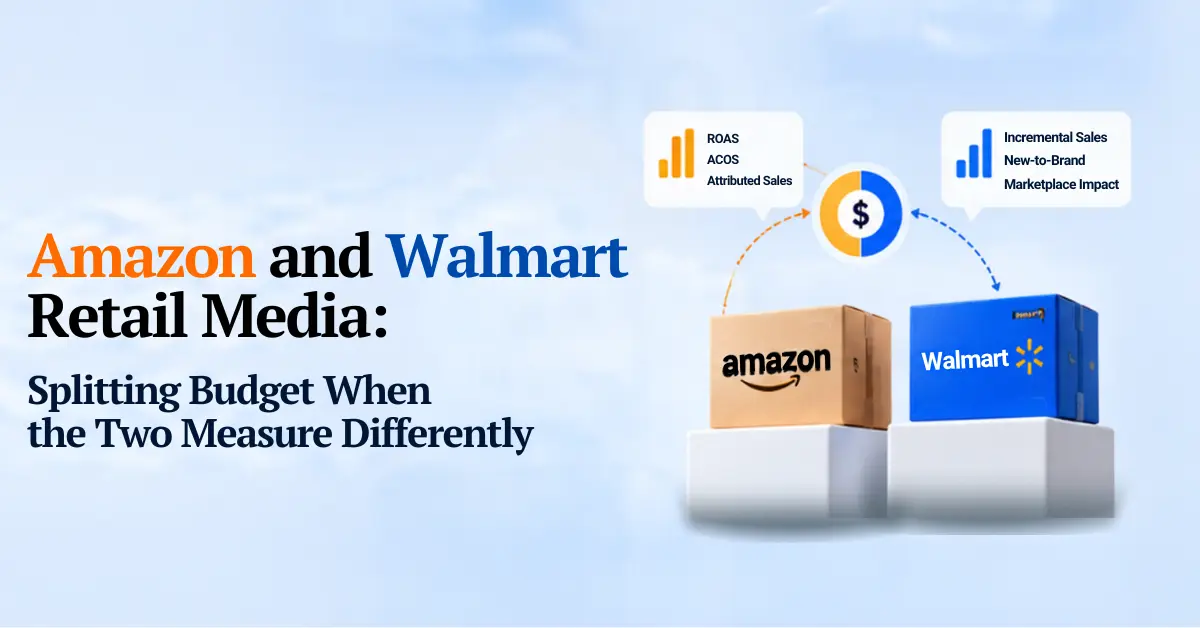
ACoS is ad spend divided by ad sales. TACoS divides the same spend by total sales, organic included, and that one change shifts the whole picture more than people expect.

Quick example we use with clients a lot. Brand one gets 60 percent of its revenue organically, so even with a 40 percent ACoS on paid, its TACoS works out to 16 percent. Brand two is proud of its 20 percent ACoS (fair, on its own it looks good), but roughly 90 percent of its sales need an ad to happen, so TACoS comes in at 18. Brand two looks more efficient in a spreadsheet. Brand one is the one with a real business underneath it, and brand two has what’s basically an ad habit.

It matters more this year because clicks got expensive. Platform-wide ACoS is around 32 percent in 2026, up from about 25 to 30 in 2024, and when you’re paying more per click you want to know whether that money is building rank or just renting sales.

What is a Good Amazon TACoS Benchmark at Each Stage?

Depends on how old the product is. Roughly three bands.

In the first one to three months, 25 to 40 percent is normal and seeing it touch 50 wouldn’t worry us much. No reviews, no sales history, no organic rank to speak of. Of course the ads are carrying it.

Somewhere between months three and twelve you’d want it drifting down to about 15 to 25 percent. Organic sales should be kicking in by then and dragging the figure lower even if spend doesn’t change.

Once a product has good reviews and holds its keyword rankings, 8 to 15 percent is a healthy place to sit, and the brands that care mostly about profit tend to push it toward the 8 to 12 end.

So yes, 10 percent is a real target. It’s just where you end up after a year or so of doing the earlier stages properly.

Why Do So Many Brands Set the Wrong Target?

Copy and paste, mostly. A founder reads somewhere that “healthy brands run under 12 percent,” applies it to every product in the catalogue, and then has a minor meltdown when a two-month-old launch reports 35.

The reverse happens too and it’s harder to catch. Say a mature product is showing 25 percent ACoS and 22 percent TACoS. Nobody panics, because neither number looks scary. But think about what that gap means. TACoS that close to ACoS tells you almost every sale is still coming through an ad, years after organic should have taken over. In a few accounts we’ve audited, a good share of that spend was going on people who’d already typed the brand name into search and were going to buy anyway.

Good Amazon marketing services earn their keep right here, by working out which target each product should actually be chasing instead of slapping one number across the lot.

The most expensive TACoS mistake we see isn’t a number that’s too high. It’s a launch product being judged against a mature brand’s target. Teams pull back spend at the exact moment the product needs it most, the organic rank never builds, and then everyone decides the product just didn’t work.

— Vishal Singh, Performance Marketing Specialist

Should You Watch the Number or the Direction It’s Moving?

Watch the direction. We’d honestly take a brand at 18 percent and falling over one at 10 that’s creeping up.

When TACoS drops while total sales grow, organic is starting to do its share. That’s the flywheel people keep mentioning on LinkedIn, and it’s good news even if the figure still looks high. When it climbs and sales sit flat, the brand is getting more hooked on ads each month, and a low number doesn’t make that any less of a problem.

What we do in practice is split products into launch, growth and mature buckets, give each bucket its own target, and look at them once a month. Lump them into one account-wide TACoS and the problems cancel each other out on paper. Any Amazon platform marketing services setup worth paying for should report it bucketed like this as standard, rather than as one blended figure at the bottom of a slide.

Launch Target Vs Mature Target, Which One Should You Use?

If the product’s under three months old, has only a handful of reviews and is still climbing in organic rank, go with the launch range of 25 to 40 percent. You’re not trying to be efficient yet. You’re trying to get into the organic results fast so you won’t need to spend as heavily later.

The 8 to 15 percent mature range is for products that already rank, have strong reviews and sell mostly without help from ads. At that point you’re protecting margin you’ve already built.

Our rule of thumb is to wait until organic has been more than half of revenue for a few months running before switching a product over to the mature target. Switch too early and you’re back to the first mistake.

Questions We Get Asked About TACoS

Q1. Is 10 percent TACoS good?

Ans. On a mature brand, yeah, that’s a nice spot. On a new launch it usually means you’re spending too little and slowing down your own organic growth, so look at the product’s stage before deciding.

Q2. How long should a product stay at a high launch TACoS?

Ans. One to three months for most. If it’s still over 30 percent at six months and not trending down, we’d look at the listing, the price and the reviews before cutting budget, because usually one of those is the actual issue.

Q3. Why is my TACoS rising when my ACoS is falling?

Ans. Your ad sales are growing and your organic sales aren’t. You’re buying more volume, but the brand isn’t standing any better on its own, and that’s one of the clearest signs ads are replacing organic instead of building it.

Written by Vishal Singh, Performance Marketing Specialist

I work with ecommerce brands on their Amazon advertising, and TACoS comes up in pretty much every first call. More often than not the ads are fine. Someone just borrowed the target from a brand at a totally different stage.

If you’d like help setting the right TACoS targets for each of your products, take a look at our Amazon marketing services.


Q1. What is the most expensive online advertising mistake?

Ans. Audience targeting gone wrong, by a distance. A bad keyword wastes only the clicks it generates. Targeting the wrong people means every rupee goes to someone who was never going to buy. It doesn’t stop on its own. It runs until someone actually digs into who’s clicking and finds none of them were real prospects.

Q2. How often should campaigns be reviewed?

Ans. Every week for the first month without exception. After that, every two weeks at a minimum. The search terms report, audience performance breakdown, and creative fatigue all shift faster than a monthly review schedule can catch.

Q3. Does ad copy really change conversion rates that much?

Ans. The difference between two ads targeting the same audience with the same budget but different copy is regularly 200 to 400 percent in conversion rate. Copy is not a secondary consideration. It’s often the primary one.

Q4. How do I know if my conversion tracking is actually working?

Ans. Do a test conversion yourself. Check if it fires in real time inside your platform’s event manager. Then compare the conversion numbers from your ad platform against actual sales in your CRM every week. Consistent gaps between those two numbers mean something is broken in the tracking chain.

Some of the most expensive online advertising mistakes are sitting inside campaigns that look completely normal on the surface. Impressions coming in. Clicks happening. Budget spending cleanly. And underneath all of it, money going to the wrong people, for the wrong searches, tracked incorrectly, with copy that never had a chance.

Table of Contents

If you work with search engine marketing services or manage paid ads internally, this is where to look first.

1. Poor Audience Targeting

This mistake means paying for every click from people who were never going to buy. It doesn’t stay small. It scales with the budget.

A fitness brand running ads to everyone aged 18 to 65 interested in health is not targeting an audience. That’s broadcasting. Pull actual customer data. Who bought before? What age, location, device? Which pages did they visit before converting? Build lookalikes from real buyers on Meta, not from guesses about who might be interested. For B2B, LinkedIn’s job title and company size filters exist for a reason. Use them with behavioral data layered on top, not instead of it.

On Google, match types matter more in 2026 than most advertisers realise. Broad match without a solid negative keyword list shows ads for searches that have nothing to do with what you sell. Audience settings are not a one-time setup job. Review them every 30 days.

2. Wrong Keyword Selection

This is why campaigns look good in the dashboard and produce nothing in the bank account. Impressions up. Clicks up. Conversions flat.

Someone typing “how does retargeting work” is doing research. Someone typing “retargeting agency for ecommerce” is ready to talk to someone. Both live inside the same industry. Only one has buying intent. Bidding on both with the same budget treats research traffic like purchase traffic, and that’s where money disappears.

Good online advertising mistakes analysis starts with knowing which six areas drain the most money and in what order to fix them. Keyword intent is the first filter. Get it wrong here and everything downstream, the bids, the budget, the reporting, runs on bad inputs.

Negative keywords need to be built before the campaign launches, not discovered in the first week’s search terms report. “Free,” “DIY,” “how to,” and competitor names where you don’t want comparison traffic are the starting point, not the full list. Check the search terms report every week for the first month. What you think you’re targeting and what you’re actually showing for are different lists more often than not.

3. Lack of Conversion Tracking

No tracking means no real data. Every budget decision after that is a guess dressed up as a strategy.

The problem isn’t that advertisers skip tracking. It’s that they set it up wrong and never check whether it’s working. Page view is tracked instead of form submission. Most accounts have the tag firing on page load, not on actual form submission. Every false fire sits in your data as a real conversion, and you optimise against it without knowing. iOS 14 broke attribution in 2021 and most ad accounts still haven’t fixed it, which means Google Ads, Meta pixel, and GA4 are all showing different numbers, and none of them are complete.

Cross-reference them weekly against actual CRM data or backend sales numbers. If the numbers don’t match consistently, something in the tracking chain broke somewhere and you’re optimising campaigns based on wrong information.

4. Low Quality Ad Copy

This is what turns a perfectly targeted campaign into a money pit.

The pattern is almost always the same. The headline leads with the brand name. The body copy lists features. The language is vague. “High quality.” “Trusted.” “Industry-leading.” None of it means anything to someone who doesn’t already know you. And the person seeing your ad doesn’t know you yet.

In search, the headline has to match the intent behind the keyword. Someone searching for accounting software for a small business wants to see that reflected back, specifically, not a tagline that could apply to any software company on earth.

On social, the first two seconds are everything. A hook naming a specific problem the audience actually has, or a claim that catches them off guard, gets the read. A logo and a brand slogan does not. Run three different creative angles per ad set at a minimum. Pull the one that works and scale it. Replace the ones that don’t before they drain the budget.

FAQs

Q1. What is the most expensive online advertising mistake?

Ans. Audience targeting gone wrong, by a distance. A bad keyword wastes only the clicks it generates. Targeting the wrong people means every rupee goes to someone who was never going to buy. It doesn’t stop on its own. It runs until someone actually digs into who’s clicking and finds none of them were real prospects.

Q2. How often should campaigns be reviewed?

Ans. Every week for the first month without exception. After that, every two weeks at a minimum. The search terms report, audience performance breakdown, and creative fatigue all shift faster than a monthly review schedule can catch.

Q3. Does ad copy really change conversion rates that much?

Ans. The difference between two ads targeting the same audience with the same budget but different copy is regularly 200 to 400 percent in conversion rate. Copy is not a secondary consideration. It’s often the primary one.

Q4. How do I know if my conversion tracking is actually working?

Ans. Do a test conversion yourself. Check if it fires in real time inside your platform’s event manager. Then compare the conversion numbers from your ad platform against actual sales in your CRM every week. Consistent gaps between those two numbers mean something is broken in the tracking chain.

Request A Proposal

Our team will connect back with you within 24 hours.


Get In Touch