Amazon marketing is a coordinated launch system. Not a listing exercise. A system where pricing, traffic, listing quality, reviews, and ad strategy work together in the first 90 days to tell Amazon’s algorithm this product belongs on page one.
If you’re working with the best ecommerce marketing services or managing this in-house, what separates sellers who rank from sellers who disappear into page six comes down to how they execute that system from day one.
This blog covers exactly that.
Why Most Amazon Launches Fail
A product launch is not a listing. It’s a coordinated push across multiple levers designed to prove that the product sells, converts, and belongs at the top.
The failure pattern is almost always the same. Sellers spend months on the product and two days on the listing.
The algorithm rewards sales velocity, conversion rate, and relevance. A new listing with no sales history, thin copy, and no external traffic signals that the product doesn’t deserve visibility, so it gets none.
How to Launch a Product On Amazon the Right Way
Launching a product on Amazon the right way means aligning and optimizing your listing, prices, traffic, sales ads, and reviews from day one. It means doing six things in the right order.
1. Fix the Listing Before Touching Ads
The listing is where every click either converts or leaves. Ads bring the traffic. The listing closes the sale. Most sellers get this backwards, running ads to a listing that isn’t ready to convert and burning budget before the product ever had a chance.
Title needs the primary keyword in the first 80 characters. Not stuffed, placed naturally. Bullet points should lead with the buyer’s problem, not the feature. A+ Content handles objections and builds trust before the buyer scrolls away. Backend search terms should cover variations, misspellings, and related phrases that don’t appear anywhere in the visible copy.
Images close more sales than most sellers realise. Main image needs to stand out in a grid of competitors. Lifestyle images of the product in use consistently outperform plain white backgrounds in conversion rate. A comparison infographic in the image stack handles objections without writing a word.
2. Price Below Your Long-Term Target at Launch
Launching at full retail price on day one is a mistake. Amazon rewards products that sell fast.Launching 10–20% below your long-term price increases velocity without diminishing profit.
Hold that pricing for 30–60 days. Once sales history and reviews are in, raise prices slowly. A sudden large jump after launch disrupts the algorithm. Small moves over time don’t.
3. Drive External Traffic in the First Week
Amazon gives ranking credit to external traffic that converts. A product getting 400 visits from a Facebook campaign and converting at 14 percent sends a stronger signal than 4,000 impressions from within Amazon converting at 1 percent.
Build a launch list before the product goes live. Email subscribers, social followers, previous customers. Push them to the listing in the first seven days. That concentrated burst of external traffic converting on Amazon is one of the clearest demand signals you can send to A9.
4. Run Amazon Marketing Services Hard in the First 30 Days
Amazon marketing services, specifically Sponsored Products and Sponsored Brands, are not optional during launch. They’re how you buy visibility while organic ranking builds.
Start with automatic campaigns. Let Amazon find which search terms are converting. After 10 to 14 days, pull the search term report. Move converting terms into manual campaigns with aggressive bids. Cut the irrelevant spend. This is not a set-and-forget process. The first 30 days need weekly adjustments.
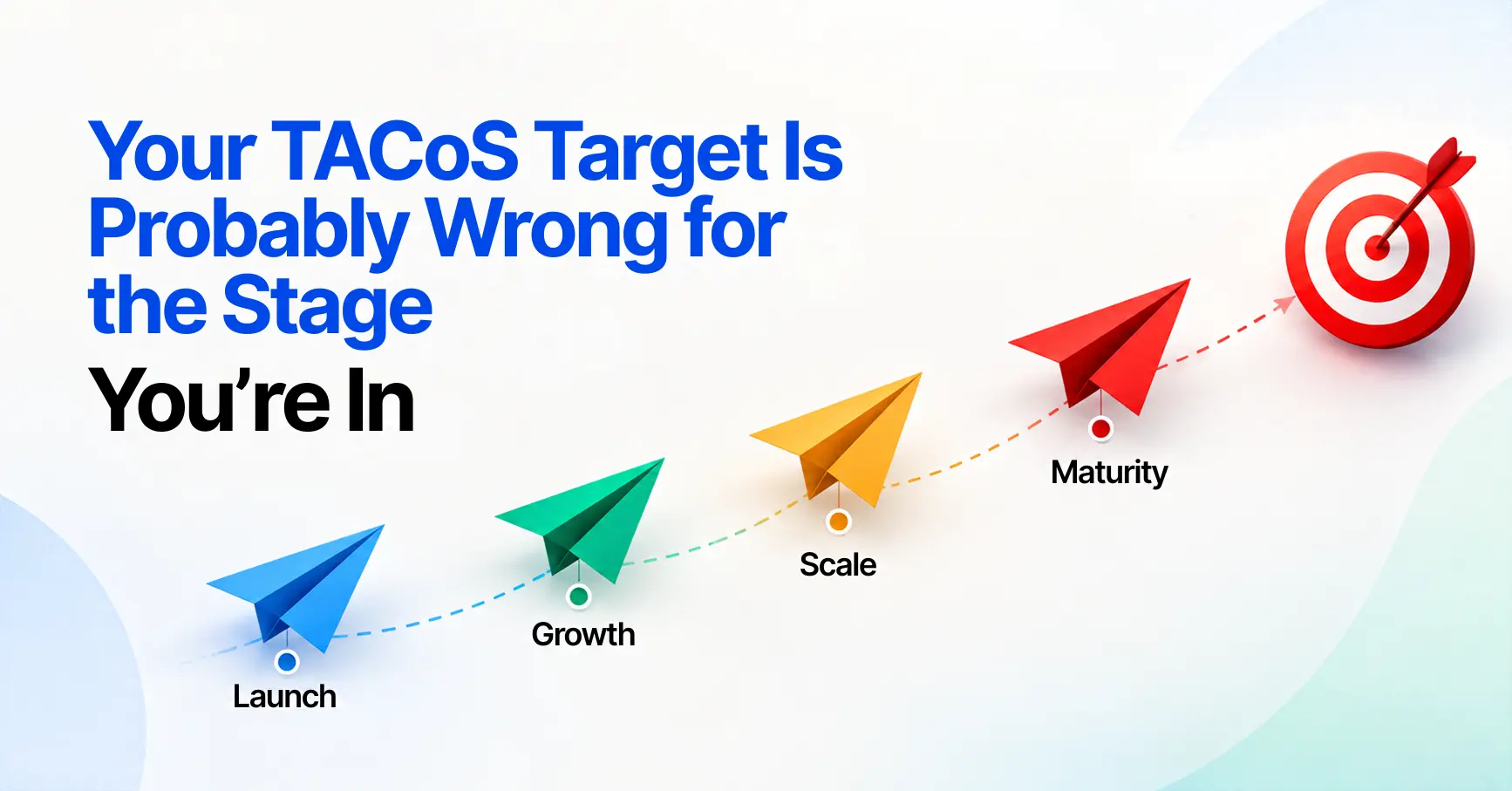
ACoS will be high during launch. That’s expected. You’re buying data and velocity, not pure profit margin. ACoS drops as organic ranking improves and ad dependency on terms you now rank organically decreases naturally.
5. Get the First Reviews Quickly
Amazon’s algorithm and real buyers both use reviews as a trust filter. A listing with zero reviews converts at a fraction of what the same listing converts at with 15 reviews averaging 4.3 stars.
Amazon Vine is the fastest legitimate path to early reviews for brand-registered sellers. Never offer anything in exchange for a review directly. The consequence is permanent suspension, not a warning.
6. Increase Visibility on Amazon Platform Through Ranking
Brands treating launch as a 90-day investment build sustainable ranking. Sellers who push hard for a week, pull back, and wait for organic results end up relaunching the same product six months later. The ranking factors that actually move things are sales velocity against category competitors, click-through rate from search results, listing conversion rate, and review volume. Every launch decision connects back to those four numbers. Not separately. Together.
Points to Remember
- Selling in 2026 is a system, not a sequence of guesses. Listing first, price strategically, drive external traffic, run ads with data, collect reviews fast, and build toward organic ranking.
- Price 10 to 20 percent below long-term retail for the first 30 to 60 days to build the velocity A9 needs to rank you.
- Drive external traffic in week one. Conversions from outside Amazon send stronger ranking signals than internal impressions alone.
- Use Amazon marketing tactics in the first 30 days. Pull the search term data at two weeks and shift budget to what’s actually converting.
- Those who understand Amazon treat launches as 90-day investments. Sellers treating it as a one-week push end up starting over.
FAQs
Q1. How long does it take to rank a product on Amazon?
Ans. Depends heavily on the category. Moderate competition, 30 to 60 days of consistent effort usually shows real movement. Highly competitive categories stretch that to 90 or even 120 days. Sellers who check ranking at day 10 and conclude it isn’t working are the ones who never find out what would have happened at day 45.
Q2. How much should I spend on Amazon ads during a launch?
Ans. There’s no fixed number but there is a fixed mistake: a daily budget that generates fewer than 20 real clicks gives the algorithm nothing to learn from. You end up spending money for weeks and collecting data that’s too thin to act on. Start with enough to get actual click volume. What that number is depends on your category’s average CPC, not on what feels comfortable.
Q3. Does external traffic actually help Amazon ranking
Ans. Yes. Amazon tracks traffic sources and gives external conversions positive weight. A product drawing buyers from outside the marketplace and converting them tells A9 the demand is real. Google Ads targeting Amazon product searches and Facebook traffic to the listing both work in practice.
Q4. What is the single most important factor in a successful Amazon launch?
Ans. Listing quality and sales velocity work together from day one. A listing that doesn’t convert wastes every click. Sales velocity without conversion burns money. Both need to be ready before ad spend starts.