Offline marketing alone is no longer enough in today’s businesses. People search, compare, and decide online before buying anything. Because of this shift, companies invest in digital marketing services to reach customers where they already spend time, the internet.
But many business owners still feel confused. They hear terms like SEO, ads, or social media marketing, yet they are not sure how everything works together.
This blog describes digital marketing in an easy word that everyone can understand and demonstrates how it can indeed be employed by businesses so that they can grow. To know how to make use of these services, one should be in a field to get an idea of what digital marketing really is.
Understanding Digital Marketing in Simple Terms
Digital marketing involves using internet technology in the marketing of products or services. Rather than placing billboards or advertisements in newspapers, brand strangers communicate with people via websites, search engines, social media, email, and online advertisements. A combination of these activities results in digital marketing services, which assist businesses to get visitors and turn them into customers & achieve long-term relationships.
The greatest benefit is that it is measurable. Companies will be able to monitor the clicks, traffic, and conversions on the fly. After making the simple concept clear, it is now time to be acquainted with the various services, which are present in digital marketing.
Types of Digital Marketing Services
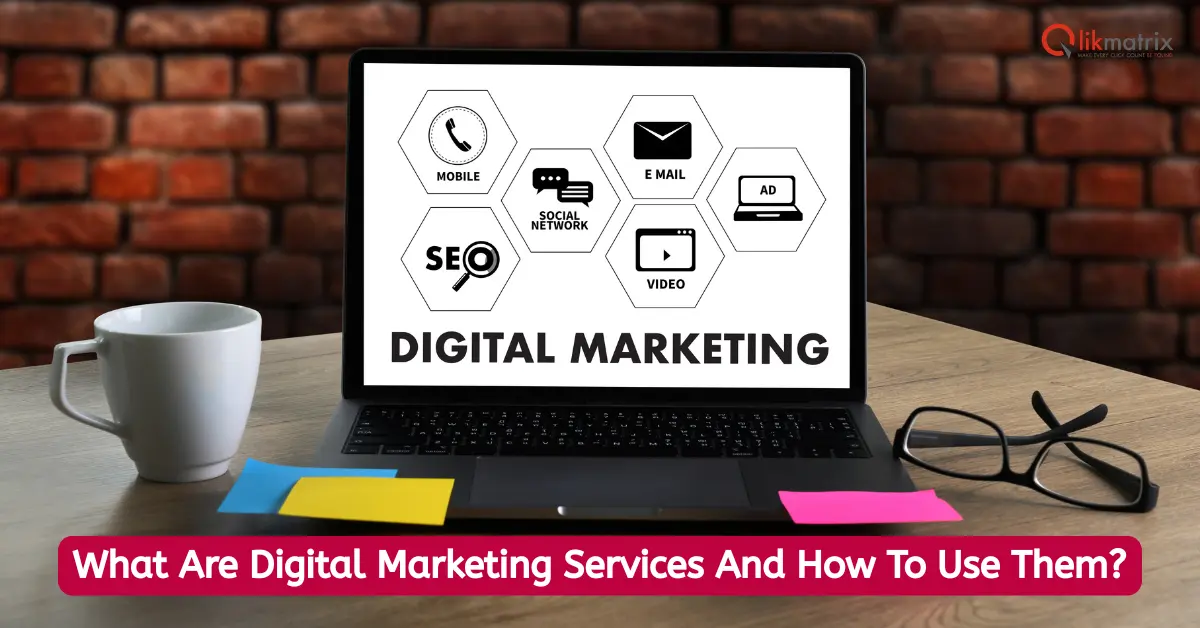
Digital marketing is not in itself a single activity. It entails various services collaborating with each other to draw & transform customers.
A few of these common services would include:-
- Search engine optimization (SEO)
- Search engine marketing (SEM)
- Social media marketing
- Content marketing
- Email marketing
- Display advertising
- Influencer marketing
Such are typically categorized as types of digital marketing services that agencies offer to businesses of any size. The services concentrate on different levels of customer journey. Some of them are attention oriented and others are conversion oriented. We have known the key categories, now it is time to dive into the rich pool of services that the business can avail on the internet.
Online Marketing Services List
There is hardly a business that operates on a single method of marketing. It is rather a collection of tools that are integrated to create a strategy. An online marketing services list usually includes:
- Organic search engine optimization.
- Fast traffic advertising based on pay-per- click.
- Social media brand awareness campaigns.
- Educational & trusting content marketing.
- Retention email marketing.
- Better conversions through website optimization.
When these elements work together, businesses see stronger results. Each service supports the other. For example, content improves SEO, and SEO brings traffic that email marketing can nurture. But simply knowing the services is not enough. Businesses also need to understand how they actually work together for growth.
How Digital Marketing Works for Growth
Many people think marketing is just about promotion. In reality, it follows a structured process. First, marketing attracts visitors. Then it builds trust through information and engagement. Finally, it converts visitors into paying customers. This process explains how digital marketing works for growth in a practical way. The strategy usually follows three stages:
- Awareness: Individuals learn about the brand via search engine, advertisements or via social media.
- Consideration: They read blogs, videos or compare products.
- Conversion: They do so by making purchases, signing up or making calls to the business.
The awareness of this pilgrimage assists companies to have more effective marketing campaigns. By knowing the process of growth, the next thing is to know how business can commence using these services successfully.
How Businesses Can Start Using Digital Marketing
A massive budget is not necessary when starting on digital marketing. The trick is to select an appropriate strategy. Most businesses begin with a strong website & basic SEO. This helps them appear in search results when people look for their products.
Then they invest in digital marketing services like paid ads or social media campaigns to introduce more rapid traffic. They eventually incorporate content marketing and email marketing in order to develop leads. The incremental strategy assists companies in expanding without straining the resources. Nonetheless, effective marketing is also closely connected with the knowledge of the audience.
Pre-Marketing Research: Knowing Your Audience Before Marketing
Businesses must know:
- Who their customers are
- What problems they face
- Where they spend time online
The nature of the content that they like.
Once these details are clear, marketing messages has become more effective. For example, a fashion brand may focus on Instagram & influencers. A B2B software company may focus on LinkedIn & search engines. Understanding the audience ensures digital marketing services reach the right people. After identifying the audience, businesses must also measure results to improve performance.
Evaluating Performance and Enhancing Strategy
One of the biggest strengths of digital marketing is data. Businesses can track:
- Website visitors
- Ad clicks
- Conversion rates
- Customer behaviour
- Return on investment
The knowledge aids the marketers to respond to the campaigns and also enhance outcomes. As an example, there may be a need to improve on the landing page in case of a low number of sales with a high number of clicks on the campaign. Businesses can make marketing a learning process by examining data on a frequent basis. This is what ensures over time sustainability of digital marketing.
Why Businesses Use Professional Digital Marketing Support
The marketing channels are time consuming and require skills to manage them. SEO, advertising, analytics and content creation are all skills that demand various skills. Due to this complexity, several firms outsource the services of professionals experienced in digital marketing services. Professionals are aware of algorithms, tools, & trends in the industry.
They also understand the techniques of combining several strategies in achieving superior outcomes. Collaborating with skilled marketers enables the companies to address operations and the experts to do the growth efforts. The expert guidance is even more helpful as marketing is constantly changing.
Conclusion
Digital marketing has transformed the process of interaction between a business and its clients. Brands are no longer waiting across the internet to be discovered by people, now they are actively engaging audiences via search engines, social networks, and through target marketing. The knowledge of digital marketing services will assist companies to select the appropriate tools and develop an effective growth plan.
SEO and paid advertising as well as content and email marketing are some of the services that each contributes to attracting & converting buyers. Digital marketing does not just raise visibility when applied properly. It establishes a long run relationship, enhances brand trust, & contributes to sustainable growth of business.