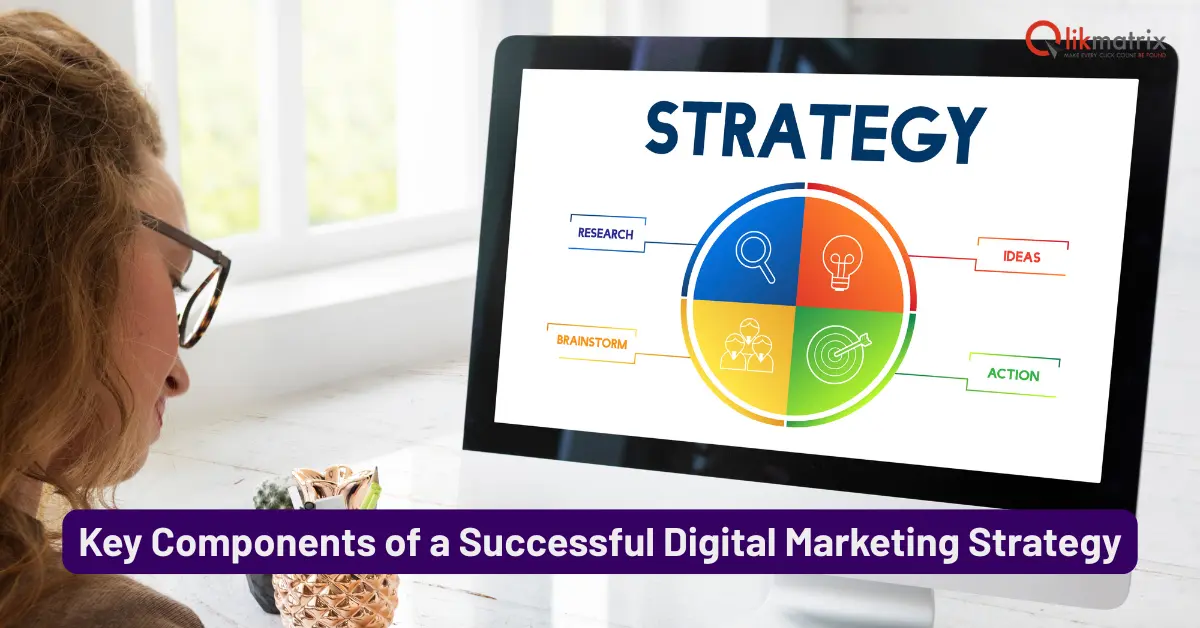
An effective digital marketing strategy is a plan that assists firms to attract, engage and convert the right audience through the right channels and data. Businesses today are using digital marketing services to create this strategy and achieve true growth. But without the right structure, even good marketing efforts fail.
Here in this blog, we deconstruct the main elements that make a strategy a success in real life. Before we move further, we will address a question that most businesses tend to pose. Does digital marketing strategy really work?, let’s get an answer to it.
What is the Secret of a Successful Digital Marketing Strategy?
A successful strategy for digital marketing services includes:
- Clear business goals
- Right audience targeting
- Strong content
- Consistent tracking
A successful digital marketing strategy connects all these elements into one system. We have an idea of what success is now, so we will explore each one of these, one at a time.
1. Specific Business Goals & Objectives
Every strategy starts with a goal. Without direction, marketing becomes random.
Your goals could include:
- Increasing sales
- Generating leads
- Building brand awareness
- Improving website traffic
Every decision is directed by clear goals. They assist you in gauging the progress and realigning the efforts. After establishing goals, the next thing will be to know who you want to reach.
2. Audience Research & Targeting
You cannot market to everyone. A strong strategy focuses on a specific audience.
You need to understand:
- Who they are
- What they need
- How they search
- What influences their decisions
This helps you create campaigns that feel relevant. Good targeting improves engagement and conversions.
3. Content That Builds Trust & Value
Content is the backbone of any strategy. A digital content marketing strategy focuses on creating useful and meaningful content.
This includes:
- Blog posts
- Videos
- Social media content
- Email campaigns
Content should answer questions and solve problems. When people find value, they trust your brand. And trust leads to conversions.After making the content, the next thing is to select the appropriate channels.
4. Choosing the Right Marketing Channels
Not all platforms are suitable for all businesses. You have to choose channels according to your audience and objectives.
Popular channels include:
- Search engines (SEO, PPC)
- Social media
- Email marketing
- Content platforms
It is better to do a narrow-minded approach rather than to do everything first. The selection of the appropriate platforms enhances effectiveness and outcomes.
5. Strong Execution & Campaign Planning
A strategy is only useful if it is executed well.
This includes:
- Campaign planning
- Ad creation
- Content publishing
- Budget allocation
This is their weak point in many businesses. It is not sufficient to know how to create a digital marketing strategy. You have to make it a regular practice. Execution turns plans into results.
6. Data Tracking & Performance Analysis
One of the biggest advantages of a full funnel digital marketing strategy is data. You can measure everything.
Important metrics include:
- Website traffic
- Conversion rate
- Cost per lead
- Return on investment
Tracking helps you understand what works. It also helps you fix what doesn’t. This improves performance over time.
7. Endless Optimisation & Testing
There is no flawless strategy at the beginning. You need to test & improve regularly.
This includes:
- A/B testing ads
- Changing headlines
- Updating landing pages
- Adjusting targeting
Minimal adjustments can lead to major changes. That is how a digital marketing strategy will be strengthened with time.
8. Full Funnel Approach to Marketing
Customers do not buy instantly.
They go through stages:
- Awareness
- Consideration
- Decision
A full-funnel digital marketing strategy addresses all these stages. You attract users, educate them, and then convert them. This approach increases conversion rates & customer retention.
9. Coherence in Marketing Activities
Results do not come from one campaign. They come from consistent effort. Regular posting, continuous ads, and updated content build momentum. Consistency also improves brand recall. People start recognising your business. This leads to better engagement and trust.
10. Use of Tools & Technology
Modern marketing depends on tools.
These include:
- Google Analytics (GA4)
- Ad platforms
- CRM systems
- Automation tools
Tools help track performance and save time. They also improve accuracy. Using the right tools strengthens your overall strategy. And so, now, with everything covered, we may put it all together.
How to Build a Digital Marketing Strategy?
If you are looking to build a digital marketing strategy, then you may use this:
- Define clear goals
- Understand your audience
- Choose the right channels
- Create valuable content
- Track performance
- Optimise regularly
This step-by-step approach makes strategy easier to manage. It also ensures steady growth.
Conclusion
A successful digital marketing strategy is not complex. It is organized, predictable and outcome-oriented. Each element contributes to the final result: clear objectives, powerful content and active optimisation. Marketing becomes predictable and scalable when all elements are working together. Companies that adhere to this strategy experience consistent growth, improved interaction, & conversion. The trick lies in the fact that one has to plan and do the same thing over and over, and also to get better and better.
FAQs
Q1. What is the most important part of a strategy?
Ans. When you are not certain about what you would like to accomplish, then your energies are misplaced. The important strategy is clear to run any campaign more targeted and efficiently.
Q2. What should be the frequency of the strategy revision?
Ans. A digital marketing plan will be updated approximately every couple of months. Even slight alterations that are made according to the data can improve the performance in the long term.
Q3. Is it possible to develop a powerful strategy with a small business?
Ans. No, it is not necessary that small businesses must have huge budgets in order to come up with effective strategies.
Q4. Is content really necessary?
Ans. Yes, content is an essential element of digital marketing. It assists in the education of the users and resolving their questions.
Q5. What is the time to turn in the results?
Ans. Results are dependent on channels. The paid campaigns will yield results in days or weeks. SEO and content marketing are more time-consuming.