In late 2025, a surprising Google Ads Report stirred curiosity across the digital world.
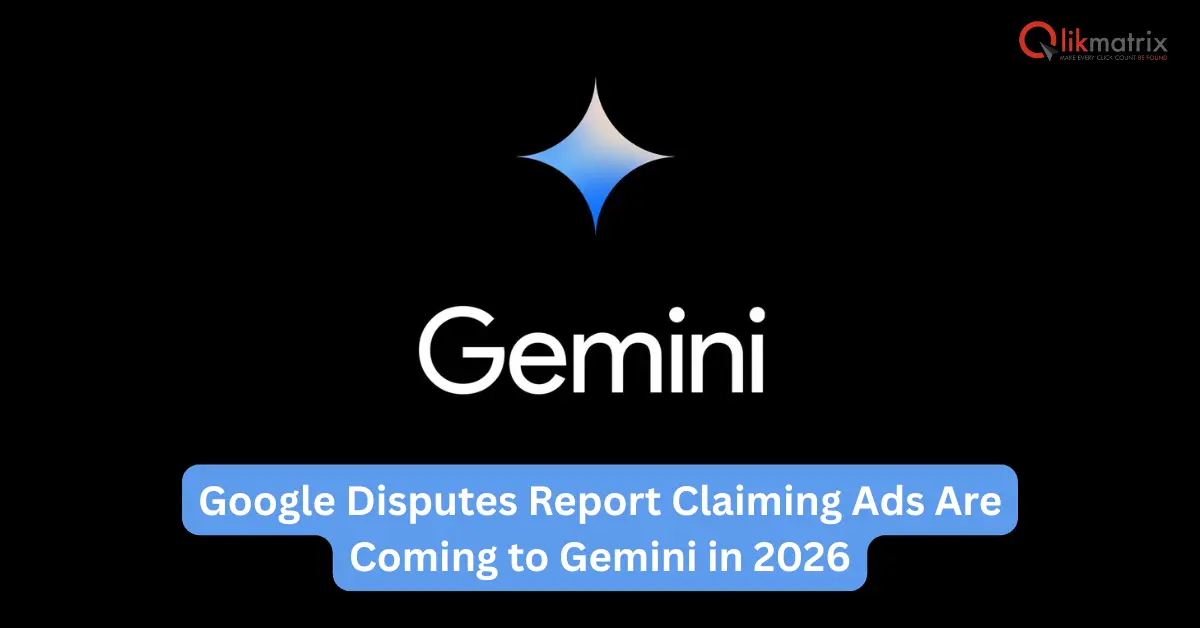
The report claimed that Google plans to bring advertisements into its AI chatbot, Gemini, in 2026. This caused a lot of buzz, both among advertisers and regular users, especially those closely following trends in search engine marketing services. But shortly after, Google publicly denied the claims, calling them inaccurate and unclear. In this blog, we’ll look at what the Google Ads Report said, why Google pushed back, what it means for advertisers, and what this could mean for the future of Search and AI-powered tools.
Before we dive deeper into the main detail, let’s understand the context around Gemini and advertising.
What Was the Report About?
The original report, published by a well-known media outlet, said that Google had informed some advertising clients about plans to introduce ads within the Gemini AI chatbot sometime in 2026.
According to unnamed agency buyers, Google representatives discussed potential ad placements, formats, and testing timelines during private calls with advertisers.
The report suggested this would be a new monetization model, separate from Google’s current ads ecosystem, including search ads, YouTube ads, and other placements.
This part of the situation made advertisers pay attention because it pointed toward a big shift in how companies could use AI to connect with customers.
But before we go further into Google’s response, let’s see why this report mattered in the first place.
Why the Report Was Big News?
The idea of ads in AI platforms is exciting and controversial at the same time.
Ads are a core part of how Google makes money. Most people know Google as one of the biggest advertising platforms in the world, thanks to Advertise on Google products and tools. But so far, Gemini has been ad-free.
That would herald shifts to how people engage with AI, to how advertisers target ads and, not least, to how Google balances its users’ experience with the need for monetization.
The speculation also sparked broader conversations across Google Ads News Today, especially around how conversational AI might fit into future ad strategies.
Before we dive into Google’s denial, here’s what the Google AI landscape looks like right now.
Current Ad Placements in Google’s AI Products
Google has already started testing ads in other parts of its AI systems.
For example, ads appear in AI Overviews within search results in some regions. These are generated summaries shown when users perform complex queries.
This indicates that Google is exploring ways to show ads in AI-powered experiences without directly impacting the core Gemini chat app , at least for now.
Understanding this helps explain why the rumours gained traction, advertisers want new opportunities to reach audiences.
Now let’s look at how Google responded to the claims.
Google’s Official Response to the Report
Google did not stay silent.
Dan Taylor, Google’s Vice President of Global Ads, responded publicly on X (formerly Twitter), stating that the claims were inaccurate.
There are currently no ads in the Gemini app, and there are no plans to put them there at the moment.
Google’s official Ads Liaison was also promoting that message, confirming the denial and stating explicitly that Google has not made changes to Gemini’s ad policy.
This kind of direct response and gesture from a senior executive is far less common, and it underscores how seriously Google takes its messaging around advertising and artificial intelligence.
Before we examine what this means for advertisers, let’s touch on why Google might be cautious about introducing ads into Gemini.
Why Google Might Be Hesitant About Ads In Gemini?
Gemini is designed to serve users with conversational and context-aware responses. Users often view it as an information helper, not a place for ads.
Bringing ads into that experience could shift user perception or interrupt natural interactions.
Google probably wants to avoid compromising user experience, especially while Gemini is still growing its user base.
Plus, ads in AI systems raise questions about relevance, transparency, and trust, especially if ads appear inside conversational answers.
Even so, Google is actively expanding ad placements in other AI features and experimenting with new formats. The focus may be on balancing monetization opportunities while keeping experiences smooth for users.
Next, we’ll look at what advertisers and industry experts are saying about these developments.
Advertisers’ Reactions and Industry Views
After the Google Ads Report, many advertisers reacted with interest and caution.
Some saw the potential for new ad placements as a big opportunity, especially if Gemini becomes a central hub for search and answers. Others questioned how ads inside AI interactions would work technically or ethically.
There were also industry discussions about how Google might position ads in the future, possibly targeting users based on context or user intent within Gemini’s reply interface.
However, Google’s denial prompted a clear message: no ads are coming to Gemini soon.
Many industry discussions now focus on confirmed updates and verified Google Ads News, rather than early rumours.
This leaves advertisers watching Google’s other AI monetization moves, like ads in AI Mode and AI Overviews.
Let’s now unpack what this means for marketers and search engine marketing services overall.
What Does This Means for Digital Marketers?
For marketers, the story highlights one key idea: AI and advertising are evolving fast.
Even though Google denies current plans for ads inside Gemini, the wider trend points toward more AI-related ad opportunities across Google products.
Advertisers should continue monitoring developments in search, AI-based search experiences, and other innovative placements.
This could impact how brands plan campaigns, target audiences, and measure performance going forward.
Understanding where ads are allowed now, and where they might appear in the future, remains an important part of future planning.
But before we go to the conclusion, let’s review what we’ve learned.
Recap: The Report vs. Reality
To summarise the situation:
Advertisers were told about possible ads in Gemini in 2026, according to the Google Ads Report.
Google strongly denied those claims, saying Gemini remains ad-free for now.
Ads already exist in some AI search features like AI Overviews and AI Mode, but not in the Gemini chatbot.
This shows the complexity around AI monetization and how quickly expectations can change.
The next step for many in the industry will be following Google’s actions closely and watching for clear updates on advertising policies.
What to Watch Next?
While the immediate future looks ad-free for Gemini itself, the topic isn’t settled.
Google could develop alternative methods to build ads into AI tools in ways that don’t detract from the user experience. Advertisers and marketing practitioners should keep current with product announcements, policy updates, real-world testing.
Google’s AI and monetization strategy will likely shape how marketers approach strategizing for search, AI content or predictive tools.
Remember, what matters most isn’t just rumours, it’s what Google officially confirms and implements.
Conclusion
The Google Ads Report claiming ads are coming to Gemini in 2026 sparked widespread interest. Advertisers were curious about how AI could open new monetization paths. But Google’s strong denial clarified that nothing has changed yet.
For now, Gemini remains an ad-free zone, while Google continues to test advertising in related AI features.
For marketers, this episode is a reminder that the AI and search landscape is evolving fast. Keeping track of official announcements and carefully separating them from speculation will help brands make smarter decisions.
As AI continues to grow, new forms of monetization, ad placements, and user engagement models will shape the future of digital advertising.